
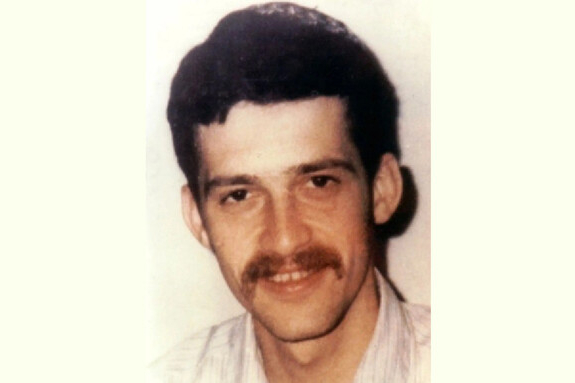
The remains of Yehuda Katz, the last missing soldier from the Battle of Sultan Yacoub, were located overnight from Monday-Tuesday in a special operation by the IDF in cooperation with the Mossad. The battle was a skirmish between the IDF and the Syrian army in Lebanon’s Beqaa Valley that claimed the lives of 21 Israeli servicemen. The IDF confirmed that his remains were located following an identification process at the Military Rabbinate’s casualty identification center, in cooperation with the IDF Medical Corps and Israel Police.
President Isaac Herzog said: “After 44 years of waiting, pain and longing, the missing soldier Yehuda Katz has finally come home and will be brought to Jewish burial. With his return, the circle left open and bleeding as a wound since the Battle of Sultan Yacoub has finally been closed. Today, I am thinking especially of his sister, Pirkha, and the entire family, who carried his memory and the hope of bringing him home for decades, and fought tirelessly to ensure that the State of Israel would not forget Yehuda.”
IDF Chief of Staff Eyal Zamir spoke with Katz’s family, expressing his appreciation for their decades-long efforts to bring Yehuda home. He said: “Today, the circle is closed. After 44 years, the Battle of Sultan Yacoub is finally over. All those missing from the battle have been returned to Israel. This is a special day for me, both as Chief of Staff and as an armored corps officer. From the day I enlisted in the Armored Corps, I grew up on the legacy of that battle and on the moral commitment to bring all our missing soldiers home. An entire country is united and sharing in your emotion today.”
Three Missing Soldiers from a Fierce Battle
In the Battle of Sultan Yacoub on June 11, 1982, six soldiers were left behind following the IDF’s withdrawal, three of whom remained missing for decades. In May 2025, the remains of Zvi Feldman were brought back to Israel in a special operation in Syria. The remains of Zachary Baumel were returned to Israel in April 2019.
On the night of June 10–11, 1982, the 362nd Armored Battalion entered the eastern Bekaa Valley in Lebanon, in the Sultan Yacoub area, between the villages of Mazraat Ghazi and Khamra, to establish roadblocks along the “Micha” and “Tovlano” routes. The battalion found itself in tactically disadvantaged terrain opposite Syrian forces from the 1st Armored Division, which were deployed on commanding ground overlooking Khamra, the Sultan Yacoub ridge and Jabal Otfi, alongside forces from Palestinian terrorist organizations.
On the morning of June 11, the battalion began exchanging fire with the enemy. At around 9:00 a.m., it began withdrawing southward in order to link up with IDF forces. The force moved from the Bidar al-Adas junction along the “Micha” route and joined Israeli forces positioned on the Jabal Araba and Tal Abu-Amar ridges. Due to the situation on the ground, the battalion left eight tanks behind in the area, which were captured by the Syrian military and Palestinian terrorist organizations.
By the end of the battle, the battalion and other forces had suffered 20 fatalities and more than 30 wounded. The three missing soldiers, crew members of two tanks, were involved in two separate incidents approximately three kilometers apart. In one incident, Staff Sergeant Yehuda Katz, who served as a gunner, went missing. In the second, two soldiers went missing: Staff Sergeant Zvi Feldman, who served as a loader, and Staff Sergeant Zachary Baumel, who served as a driver.
Two soldiers were taken captive: Sergeant Ariel Lieberman, a gunner who was captured by the Syrian military and returned to Israel in June 1984; and First Sergeant Hezi Shai, the tank commander, who was captured by the Ahmed Jibril organization and returned in May 1985. In addition, the tank commander, Captain Zohar Lifshitz, who was killed in the battle, was returned to Israel by the Syrians in July 1984.
The large number of missing soldiers and the difficult findings from the battle, combined with the chaos at the scene, led to disinformation about the whereabouts, fate and condition of the missing soldiers, as well as an incomplete intelligence picture that persisted for many years.
Reliable intelligence available at the time indicated that responsibility for holding the missing soldiers lay with Palestinian elements operating in the Syrian theater, under the direction and leadership of the PLO leadership at the time, headed by Yasser Arafat and Abu Jihad. The latter led a sustained effort to conceal and deceive authorities about their whereabouts, making it considerably more difficult to locate the missing soldiers for many years.