
For Bat-Chen Yeshua, CEO of the hotel chain Metaylim, a hotel is not a stand-alone business. To her, the hotel room is only the starting point. Guests need somewhere to go once they step outside—to a restaurant, an attraction, a guided tour, a fruit-picking farm, a gallery or another local business.
“People don’t come to the Galilee to spend their vacation lounging by the pool,” she says. “The concept behind our hotels is that our version of ‘all-inclusive’ includes the entire region. That’s at the heart of what we do: it’s not just about building ourselves up as a hotel chain, but about creating jobs throughout the region. It’s an ecosystem.”
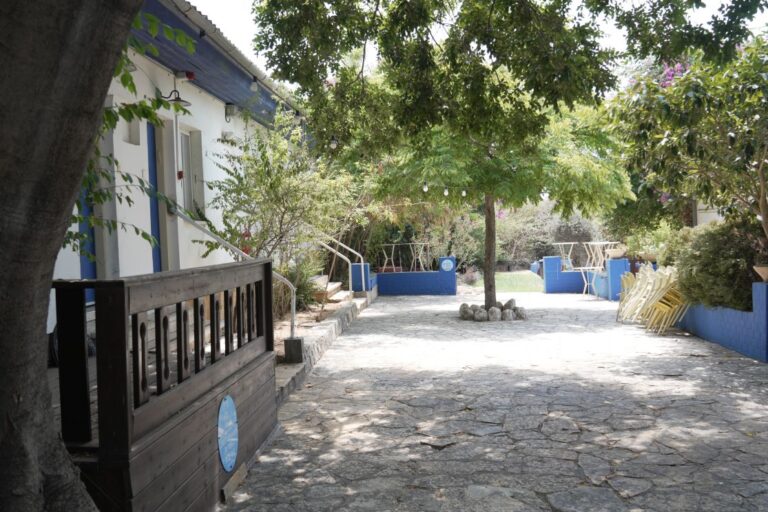
That ecosystem was severely damaged by the war, and its recovery has taken far longer than simply reopening the hotels’ doors. Metaylim has been closed for a year and a half since Oct. 8, 2023. When the ceasefire in the north made it possible to resume operations in November 2024, hotel operators discovered that much of the surrounding tourism infrastructure was still missing.
“We had to bring the entire tourism ecosystem back to life,” Yeshua says. “A lot of the restaurants and attractions are still closed.”
The problem extends far beyond hotel owners. Lior Shelef, a tour guide from Kibbutz Snir who has owned a tour company for about 18 years, sees it reflected in his work calendar. “We’re constantly developing and building itineraries that showcase everything the north has to offer,” he says. “But every time another round of fighting or another war breaks out, the calendar empties all over again.”
For a period of time Shelef’s schedule was full, particularly around spring and the Passover holidays. Each time a ceasefire took effect, bookings began pouring in again, only to disappear with the next round of fighting. “A lot of guides are already burned out,” he adds.
Even now, with no sirens or shelling in northern Israel, Shelef has to work hard to persuade travelers to return. He specializes in tours along Israel’s northern borders and around the headwaters of the Jordan River, but says the very idea of traveling in the region continues to make people uneasy.
“It’s very difficult to convince people, to tell them, ‘It’s OK, it’s safe to travel in Metula and Misgav Am,’” he says. “People don’t have confidence in the situation, because what’s been happening here lately isn’t exactly reassuring.”
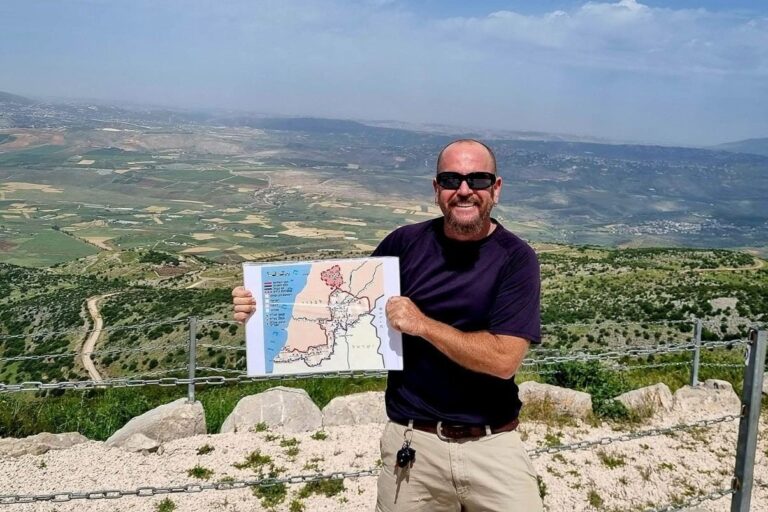
The sounds of military activity are another deterrent. “There’s quite a bit of noise from IDF activity across the border. Even when we explain that ‘it’s ours,’ it can be very frightening for the average person coming from central Israel.”
Shelef is planning a special tour of the northern border this weekend, but says travelers have been slow to sign up. The latest conflict with Iran, he says, “reshuffled the deck.” By mid-August, the number of tourists visiting the north was running at roughly 50% of normal levels.
“We work a lot with workplace groups that come during the week,” he says. “It’s extremely difficult to get people to come here, even for a day trip. We’re seeing the same thing with private customers.”
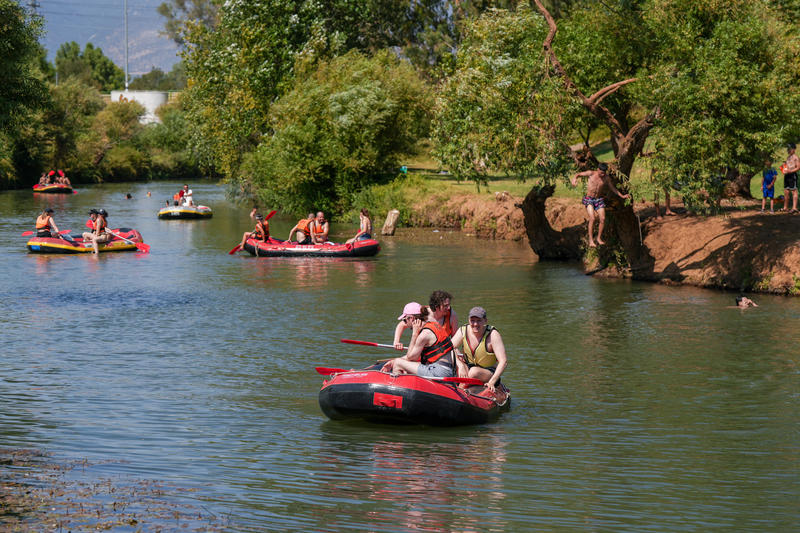
Guy Yarmak, CEO of Kayak Kfar Blum, sees the same picture from the perspective of one of the region’s largest and longest-running tourism attractions. The rafting and kayaking site has operated for more than 37 years and typically draws hundreds of thousands of visitors each season. It only resumed operations last August after remaining closed throughout the entirety of the Swords of Iron war (the war that broke out as a result of the 7 of October attack) and because of the ongoing security situation in northern Israel.
But for Yarmak, the reopening of a major attraction like Kayak Kfar Blum should not be mistaken for a broader regional recovery. “We understand that the fact that we managed to get back on our feet after the war shouldn’t be taken for granted,” he says. “Our colleagues at HaGoshrim closed. Smaller attractions were also hit, and not all of them reopened.”
In many cases, he says, businesses did not even suffer direct physical damage. “They simply couldn’t get the business up and running again. Everyone had their own reasons.” For Yeshua, the effects are already visible inside the hotels themselves. “We’ve noticed that more people are eating dinner at the hotel, and that’s a result of so many restaurants having closed,” she explains. To her, that illustrates the difference between a hotel managing to operate and an entire tourism region managing to thrive. “It’s nice that people are eating at the hotel, but that’s not the point.”
“Even When Visitors Come, There Are Fewer and Fewer Attractions We Can Offer Them”
After the ceasefire, the hotel chain began looking for temporary solutions. One was a project called “Taim Letayel,” or “A Taste of Travel,” which connected travelers with local cooks who hosted meals in their homes. “We put out an open call for anyone who wanted to host people in their home and tell their story through the food they make,” Yeshua says. “It generated an incredible amount of buzz, including among businesses that were looking for a way to operate but couldn’t reopen.”
The hotel chain has continued maintaining relationships with tour guides, restaurants, attractions and local entrepreneurs. During the war, for example, it found ways to keep the guides it regularly worked with employed.
“For a year and a half during the war, we organized tours in the Carmel with guides from the Upper Galilee,” Yeshua says. “It cost us more to bring them there, but we understood that this was what we needed to do so they could continue earning a living and remain active. That way, when conditions allowed, they would be able to resume working in the Upper Galilee.”
Yeshua says those efforts were also essential to protecting her own business. “Tourism isn’t something you can turn on with the flip of a switch. You can’t go from zero to one overnight if you haven’t somehow kept the operation going,” she says. “We realized that if we wanted to resume operations quickly in the Upper Galilee, we had to keep the system alive the entire time.”
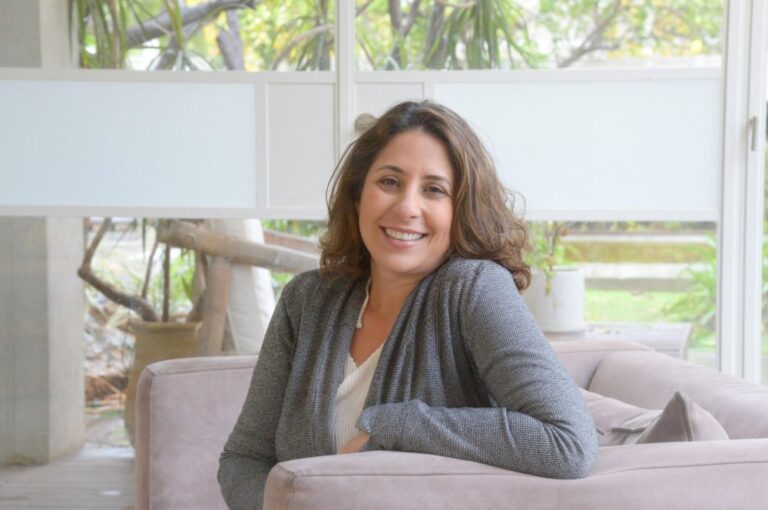
Shelef sees the same dynamic from the other side. Even when he manages to bring a group or family to the region, he needs to have something to offer them once they arrive. “Even when visitors do come, there are fewer and fewer restaurants and attractions that are open and that we can recommend,” he says. “That’s part of the calculation for a company or a family considering a trip here—they want everything to be available. When the overall experience shrinks, that affects the decision to visit.”
“If I Hear Explosions, It’s Not a Vacation Anymore”
Shelef points to a central feature of the tourism ecosystem: A business does not provide service only for itself. It also helps create the overall experience that gives visitors a reason to come to the region in the first place. Kayak Kfar Blum is a prime example. According to Yeshua, the region’s kayaking and rafting attractions once drew hundreds of thousands of visitors to the Upper Galilee each year, with an economic impact extending far beyond the river itself.
“Kayaking played an enormous role in the development of tourism in this region,” she says. “More than half a million people traveled through the Upper Galilee over the course of a year just because they came to kayak. That helped restaurants grow and created work for entrepreneurs and other attractions. It was an extraordinary economic engine.”
Today, however, even that engine is operating under difficult conditions. Yarmak estimates that July ended with roughly half the number of visitors recorded in July 2023. He expects August to finish 20% to 30% below 2023 levels. By the end of the season, he estimates overall activity will be down 30% to 40% compared with a normal year.
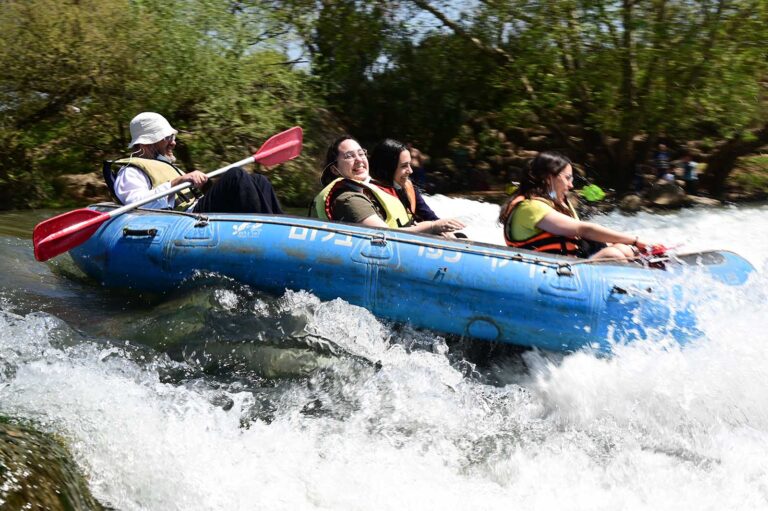
“I understand the public’s concerns,” he says. “If I lived in Tel Aviv and took my family on a day trip to the Galilee, I’d know that if something happened, I could leave. But if I’m staying overnight and, God forbid, something happens, or suddenly I hear explosions, even though they were across the border—then it’s not a vacation anymore.” Even when there is no direct danger, he says, the sounds of fighting can be enough to change someone’s plans. “Even if I only hear about it in a news alert, it has an impact.”
Young Workers Haven’t Returned to the Galilee
Alongside the decline in visitors, the tourism industry is confronting another problem that has become critical for many businesses: a severe labor shortage.
Kayak Kfar Blum employs nine permanent workers who work roughly seven to eight months during the season, about 25 seasonal employees who return each year, and another group of workers that changes from year to year.
According to Yarmak, the war dealt a devastating blow to the tourism industry’s ability to retain workers. “The average age of employees at restaurants and attractions is 25,” he says. “Most of them are recently discharged soldiers and students. That’s exactly the segment of the population that’s missing from the region.”
Some students have not returned to the Galilee, while others are serving in the military reserves. Many young residents of Kiryat Shmona who relocated to central Israel during the evacuation have also remained there rather than returning home. “All of these factors together have created an enormous labor shortage,” Yarmak says.
The problem is not simply the number of workers available, he adds, but the experience that has been lost. “There’s no substitute for an employee who has already worked here for several seasons and knows what to do,” he says. “Training new workers is very difficult—especially when you can’t even find the new employee you want to train, because they simply aren’t in the region.”
Yeshua also points to the regional consequences of the absence of young people and students. “One of the biggest factors contributing to the labor shortage was Tel-Hai University’s decision to continue remote learning over the past year,” she says. “That decision has far-reaching consequences for the entire region. You can’t abandon the region. Public institutions have a responsibility to think regionally about what it takes to bring this area back to life.”
Yarmak remains optimistic about the future, while warning that time is running out for some businesses. “The Galilee is recovering. I have no doubt about that,” he says. “We have natural treasures here that Israelis simply can’t find anywhere else. So despite everything, I’m optimistic. Unfortunately, though, the process is long and difficult. The question is how many businesses will survive until then.”
Planning Ahead Has Become Nearly Impossible: “At Best, People Book Today for the Weekend”
One of the most significant changes in tourism has been a shift in booking habits. Security uncertainty has made long-term planning nearly impossible. “In the past, people booked months in advance. That just doesn’t happen anymore,” Shelef says. “At best, people book today for the coming weekend. For a tour business, that creates tremendous instability. It’s much harder to run and plan a business when things that should be booked months in advance are being arranged from one day to the next, especially when so much of our work is based on border tours for groups.”
Metaylim hotels have seen the same shift. Yeshua says that in the past, roughly 30% of the hotel’s reservations were made months in advance. This year, that figure has fallen to just 6%. “It’s stressful,” she says. “Last year, we had reservations a year in advance. Today, with military operations and fighting that can escalate without warning, people aren’t planning ahead. Nobody knows where they’ll be able to spend their vacation. As the date gets closer, they assess the situation and decide how and where to travel.”
For attractions, the difference is especially pronounced in the organized-tour market because groups generally cannot arrange visits without significant advance planning. “A group visit is always planned ahead of time,” Yarmak says. “The uncertainty has caused a major decline in group visits compared with the past. Workplaces and organizations aren’t giving up their company outings, they’re simply choosing destinations where there’s greater certainty.”
“We Submitted a Plan, but the Government Didn’t Know What to Do With It”
According to Yeshua, the government needs to view tourism as far more than an industry that provides hotel rooms. “Tourism drives an entire regional economy,” she says. “There’s a reason countries often begin developing a region through tourism. Every visitor who stays with us spends two or three times the cost of their lodging in the surrounding area. That money stays throughout the region because it goes toward jobs, food and the most basic day-to-day economic activity.”
That is why, Yeshua argues, government policy needs to strengthen domestic tourism rather than focusing solely on attracting international visitors. “The Tourism Ministry needs to encourage people to vacation in Israel and encourage organizations to hold conferences in the Upper Galilee, rather than only in Eilat or at the Dead Sea,” she says. “To do that, policymakers need to understand the power of domestic tourism and develop an appropriate strategy. Above all, it requires coordination at both the national and regional levels.”
During the war, local business owners tried to do themselves what Yeshua says the government had failed to do. “We created a regional forum to address the challenges and problems together,” she says. “We brought together tourism stakeholders from across the region, along with the Upper Galilee Regional Council’s economic development company, and together we developed a plan for how to rebuild tourism in the Galilee.”
But when the war ended, she says, no government agency stepped forward to take responsibility for implementing the plan. “We submitted our plan, but the government didn’t know what to do with it,” she says. “Instead, it created a thousand different bodies that weren’t communicating with one another.”
“The Galilee Can Win. It Just Needs Some Quiet”
Despite everything, Yeshua, Shelef and Yarmak have no intention of giving up. They are working to preserve the region’s tourism ecosystem even as some of its links continue to weaken. Metaylim Hotels operates a regional business community, promotes local businesses on its website and social media channels, directs hotel guests to those businesses and organizes joint events. The chain’s website contains more than 800 pages introducing visitors to attractions, restaurants, tours and entertainment options throughout the Galilee.
Even when the tourism system was nearly at a standstill, the chain worked to preserve and strengthen it through workshops for entrepreneurs, the “Bishvil HaTzafon” festival, Carmel tours led by guides from the Galilee, and events for families in other parts of the country.
“What are people looking for when they come to the Upper Galilee?” Yeshua asks. “A special meal, an attraction, a guided tour, a unique trail or experience in the region. We make all of that information accessible to our guests and build partnerships with the local businesses we send them to. That way, we keep the money in the Galilee while also strengthening a local business.”
“There isn’t a guest who comes here and doesn’t visit some kind of local business—an attraction, a pick-your-own farm, a culinary destination or a winery,” she adds.
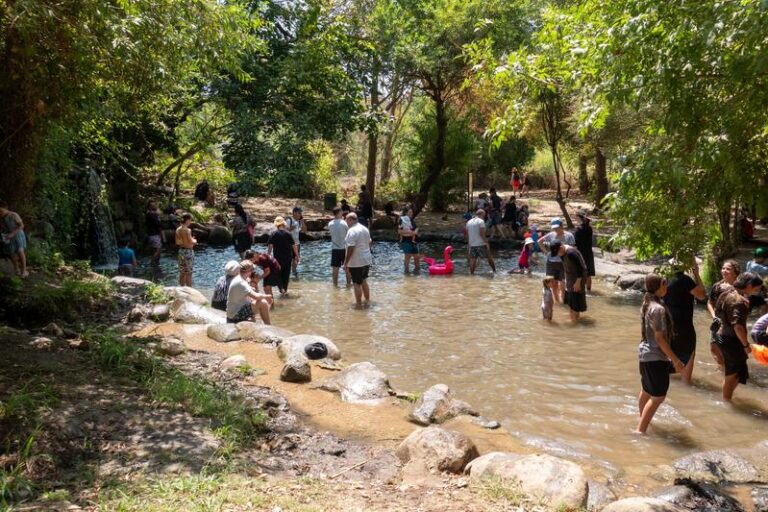
Shelef, meanwhile, continues trying to fill his calendar. “Those of us who work in tourism are optimistic by nature,” he says. “We always have to be able to look beyond the horizon and believe that things will eventually be good here. But we also have to know how to convey that optimism to other people.” He hopes the public will soon return to northern Israel. “It takes a tremendous amount of determination,” he says. “And Israelis need to come and travel here.”
For Yarmak, the greatest need is simple: quiet and stability. “What we need now is simply some quiet so we can get back on our feet,” he says. “We know how to do the work. We just need people to stop being driven away. The Galilee can offer Israeli travelers something no other region can. That’s why it can succeed. Give it the quiet and the basic conditions it needs, and we’ll make sure it does.”
For Yeshua, the Upper Galilee’s recovery ultimately depends on recognizing that no tourism business can recover in isolation. “The story of the Upper Galilee’s recovery requires cooperation and an understanding that every part of the ecosystem matters,” she says. “You can’t do this alone. A hotel can open its doors, the kayaks can get back on the water, and a guide can fill a few days on the calendar. But for tourism to truly return, visitors need to find everything that brought them north in the first place: the river, the trail, the guide, the restaurant, the attraction, the small business and the experience they simply can’t get anywhere else. Without that variety, even the strongest businesses will struggle to sustain a thriving tourism region.”