
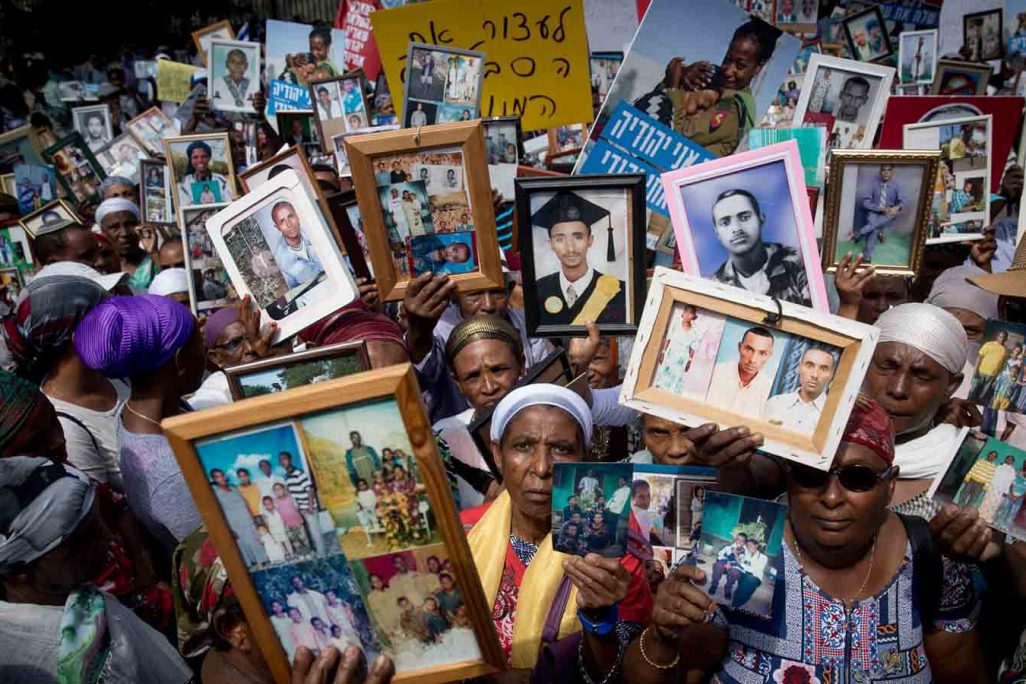
A delegation from the Population and Immigration Authority and the Jewish Agency traveled to Ethiopia last July to examine 146 applications from families seeking to immigrate to Israel under the Law of Return, it was revealed last week at the Knesset’s Immigration and Absorption Committee. The hearing, attended by representatives of the Interior Ministry, the Jewish Agency, and the Ministry of Aliyah and Integration, focused on progress in immigration from Ethiopia and the implementation of the Law of Return in the country.
Unlike Jews around the world, Israel announced as early as 2013 that there were no Jews in Ethiopia eligible to immigrate to Israel under the Law of Return, and as a result, the Jewish Agency’s operations in the country were halted. Since then (excluding the four years of the current government), immigration from Ethiopia has been carried out under family reunification.
The delegation to Ethiopia, which included Amharic speakers, examined most of the applications. It was not possible to contact 23 of the 146 families, and therefore no interviews were conducted. Michal Yosefov, a representative of the Population and Immigration Authority at the hearing, reported that 21 applications had been approved, one had been rejected, and the rest were undergoing various checks, including genetic testing.
The interviews with representatives of the families were held only in Addis Ababa, due to the complex security situation in Gondar and Tigray and the desire to keep the delegation’s profile low, including among those waiting to immigrate. The Jewish Agency, Betamu Yosef, the organization’s representative at the hearing, reported, assisted in flying and accommodating families from Tigray and Gondar for the interviews in Addis Ababa.
“Families Eligible Under the Law of Return Should Not Have to Wait for a Government Decision”
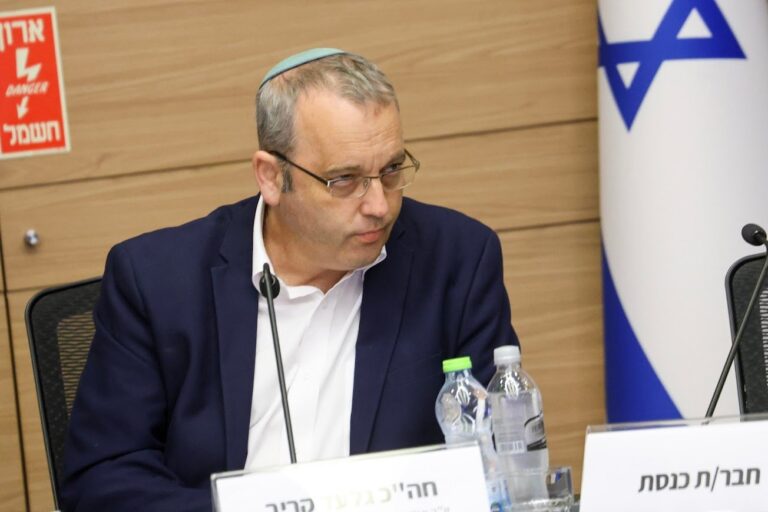
Committee Chairman MK Gilad Kariv (The Democrats) recalled that for years, representatives of the community, including MK Moshe Solomon (Religious Zionism), who was also present at the hearing, have argued that there are people in Ethiopia who are eligible under the Law of Return, particularly in the Tigray region. “One of the conclusions from the delegation is that there are Jews and people eligible under the Law of Return in Tigray,” Kariv said. “I got the impression that the State of Israel is saying that there are no people eligible under the Law of Return in Ethiopia, but the data proves otherwise. Maybe we’ll discover that we converted Jews.”
MK Solomon said, “There are people eligible under the Law of Return in Ethiopia, and the policy regarding immigration to Israel from Ethiopia needs to be changed. Families in Ethiopia who are eligible under the Law of Return should not have to wait for a government decision in order to immigrate to Israel.”
For decades, while immigration from Ethiopia continued under family reunification laws, immigrants underwent conversion because they were suspected of having converted from Judaism. However, according to the information revealed, Jews according to the State of Israel’s strict definitions are still living in Ethiopia.
Despite government decisions on the matter, the process of approving immigration from Ethiopia is handled by the Population and Immigration Authority under inadequate conditions, which families waiting for their relatives have been complaining about for many years, without receiving responses to their applications.
Following demands from the committee and members of Knesset to expand the system for handling families’ applications, ten positions were approved for employees from the authority whose sole role would be to respond to the applications. However, despite approval from the Finance Ministry, no physical facility has been found where they can process the applications. In addition, due to some kind of calculation error, there are eight positions rather than the ten that were promised.
“The committee is concerned that the Ethiopia desk has not yet been established,” Kariv concluded. “We are very concerned that it has not been established until now. The start of the employees’ work should not depend on finding a physical workplace. I request that the positions allocated to the Ethiopia desk be filled as soon as possible. I expect the Ethiopia immigration desk to be established no later than after the Sukkot holiday.”