
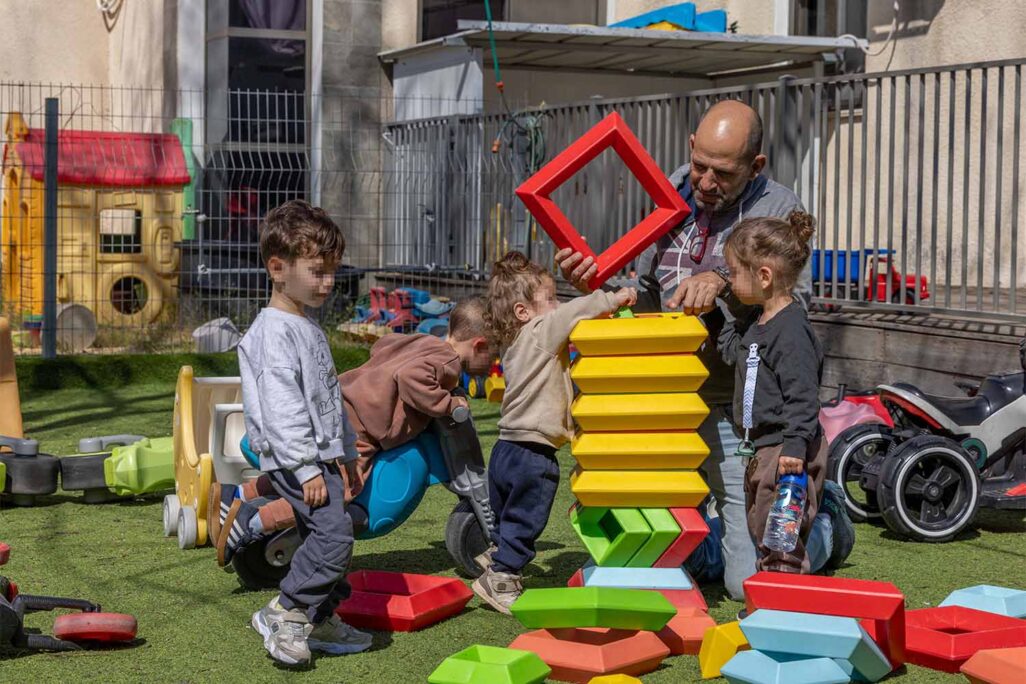
Your heart is pounding and your stomach is churning. On September 1, we stand at the daycare door, loosen our grip, and place the most precious thing we have in the hands of another person. For many parents, after a long period of war, reserve duty, and a family routine that has been repeatedly disrupted, this moment is even more complicated this year. At this moment, one of the most important partnerships in a child’s life begins: the partnership between parents and the educators and caregivers.
Sometimes, a small piece of information from a parent can make a big difference. If the child had a difficult night, if Dad is serving in the reserves, or if a significant change is taking place at home, it is important that the educator knows about it. At an early age, children are greatly affected by what happens in their immediate surroundings, and this information can help the staff better understand a change in behavior, unusual crying, or an increased need for closeness. This allows the educator to tailor their response to what the child is experiencing that day.
But for this partnership to work, educators also need to receive the tools they deserve from the system. A childcare educator is alongside toddlers for many hours every day, during the most critical period of their development. They are the one who soothes, hugs, teaches, identifies changes in behavior, and may be the first to notice a developmental difficulty or distress. It is complex, professional work that carries enormous responsibility.
Despite this, the state still does not treat it that way. In Israel, childcare educators currently require just 220 hours of training, and around half of workers in the field have still not undergone professional training. This is not a criticism of the educators, many of whom do difficult and dedicated work every day under challenging conditions. It is a criticism of a system that has failed for years to ensure that each of them receives professional training, ongoing guidance, and working conditions that reflect the scale of the responsibility placed upon them.
Love and hugs are an essential foundation, but even the most dedicated educator needs professional knowledge: to understand developmental stages, identify early signs of difficulty, read a toddler’s body language, and know how to create an environment that promotes security, curiosity, and independence.
We already know that the first three years of life are critical to a child’s development. And yet, Israel invests less than one-tenth of the average in developed countries (the OECD) in the quality of early childhood education. This gap is reflected in staff shortages, burnout, and the difficulty of retaining professional and experienced staff over time.
A child is not born at the age of three, and therefore responsibility for their education does not begin there either. If we want parents to be able to stand at the daycare door and feel that their child is in good hands, we need to invest in those hands: ensure training for every educator, regular professional guidance, fair pay, and working conditions that will enable quality educators to enter the profession and remain in it.
The partnership between parents and educators is the child’s safety net. It is the state’s responsibility to strengthen those who hold it every day.
***
The author is a parent and early childhood education staff instructor