

Jewish-American author Meg Keene (46) wrote a novel in seven days, in shock following the October 7 massacre. "This was my response," Keene, who lives in California north of San Francisco, tells Davar in an interview. "My anger expressed itself through very unapologetic writing. I wrote for us; I dedicated the book to Jewish women."
Within six weeks, she received twenty requests from agents for the full manuscript. She was surprised. Although she had already written two books—feminist wedding guides that became bestsellers—and built a successful social media platform with millions of readers and followers, she notes that in fiction, even successful authors are used to waiting years for a manuscript to be accepted.
And then the inquiries stopped, without explanation. The editor at the publishing house that released her previous books "essentially pretended to be dead. For an entire month, she didn't answer any calls or emails. That was the first warning sign that something was wrong."
According to Keene, agents began raising concerns that she might be too publicly political, expressing worry over her being a Zionist Jew. One agent found encouragement in the fact that at least the characters in the novel were not Zionists. "Of course they are Zionists," Keene says, "to a reader who understands." The agent was likely encouraged by the fact that the word "Zionist" does not explicitly appear in the text, which includes a visit to Tel Aviv and expressions of affection in Hebrew.
Another agent, Jewish herself, told Keene directly that to sell the book to a publishing house, she would need to strip out any Jewish element not strictly essential to the plot. This included the name of a central character, Yael, whom the agent suggested renaming to something that didn't sound Israeli—perhaps "Sue."
Keene's novel, The Swan Dive, tells the story of Eve Klein and Eli Levy, two diaspora Jews (from the US and the UK) who met in their youth on a fateful flight and experienced a brief, intense connection that was cut short. The book describes their reunion twenty-one years later. Yael Cohen is Eve's best friend.
Ultimately, no publishing house chose to publish the book. Today, it is passed "hand to hand" digitally. "I've seen it being read on the beaches of Tel Aviv," Keene says. "Jewish women are loving it."
"Not every 'no' expresses racism," Keene says. "Maybe no 'no' expresses racism—you can never know. But there was a shift. I spoke during those days with all kinds of Jewish authors, and everyone had the exact same story. So fine, maybe my book wouldn't sell, maybe this person's or that person's book wouldn't either. But all of ours? As if all the Jews forgot how to write well after October 7th."
A 76% Drop in Deals
Content related to Jews and Israel has been considered "radioactive" in the US publishing industry since 2024, according to accumulating evidence. The phenomenon manifests in various ways, including demands on authors to erase references to Israel. At times, there are overt displays of "cancel culture": cancellation of author events, review-bombing negative reviews online, or publishing a color-coded ranking chart under the headline "Is Your Favorite Author a Zionist?"
Data analyzed by Keene shows a 76% drop in the number of announced deals for fiction books by Jewish authors featuring distinctly Jewish or Israeli content between 2023 and 2024. According to the data, published by the Jewish Telegraphic Agency (JTA), despite a slight recovery in 2025, the figures remained 47% lower than in 2023. In early 2026, calculated on an annualized basis, the decline deepened to 82% compared to 2023.
"They claimed my story was just an anecdote and there was no data to back it up," Keene shares. "So I said—let's see if the data backs me up. In the middle of the research, I realized: My God, the situation is far worse than I thought."
During 2026, Keene became a research partner with the Anti-Defamation League (ADL). In this role, she is responsible for writing the section on the publishing industry in an as-yet-unpublished report examining antisemitism and the exclusion of Jews and Israelis in the arts world. "The ADL stamp of approval is significant," Keene says, "because this problem is being denied."
Facing criticism claiming that Jewish authors continue to publish Jewish content in significant numbers, Keene refines her criteria: "distinctly" Jewish or Israeli content, and publication by a major mainstream publishing house. According to her, recent years have highlighted trends such as non-Jewish authors publishing books with Jewish content; Jewish characters who never reference Jewish traditions or a connection to Israel; and books by Jews on distinctly Jewish topics marketed by publishers without any hint of that reality.
"They want us all to be Marranos [secret Jews]," Keene says. "The industry is fine with you being Jewish, as long as you never mention it." However, she notes one glaring exception: "Anti-Zionists have no problem getting published."
"Things Are Said That Shouldn't Be Said to Any Other Minority"
Keene says that based on her conversations with Jewish authors, the ostracization is particularly severe in genres like children's books and romance novels, which are supposed to emphasize empathy and emotional connection to characters. One non-Jewish editor wrote in a feedback note on Keene's manuscript that she couldn't manage to feel any emotion toward the Jewish characters in the novel.
"You couldn't say such a thing about any other minority group," Keene says. "If someone said, 'I can't feel empathy toward these Latino characters, and I didn't understand why,' it would sound monstrous."
Instead of turning Yael into Sue, Meg Keene decided to become an activist for the "People of the Book." Keene became a leader in initiatives to research and quantify the freezing of "Jewish" texts, as well as voicing criticism of the literary establishment. This past July, she even launched a new sub-imprint, 'Meg Keene Books', operating as part of Wicked Son Press. For her, it is intended to serve as a literary "Noah's Ark"—born out of the realization that the traditional liberal establishment has ceased to be a safe home for Jews.
Barriers on the Way to Publication
There are instances where the organized cultural boycott against Israel and its supporters (BDS) is openly embraced, with some literary agents posting statements on their manuscript "wishlists" such as "No Nazis and No Zionists." However, the anti-Jewish trend mostly operates covertly and in a decentralized manner, through barriers at various stages between writing a book and its publication.
According to Keene, "I've heard off-the-record from people that many agents and editors, especially younger ones, do a 'Control-F' search for the word 'Israel' in any manuscript by someone they perceive as Jewish—and if it appears, it's an automatic rejection." She says Jewish agents are often the ones who suggest removing Jewish and Israeli markers to help the books get published: "They're not against us. Warning us is an act of human kindness."
Testimonies from various writers were published in a report by the writers' organization PEN America. Deborah Harris, an Israeli literary agent who primarily represents Israelis, shared that she began receiving numerous representation requests from Jewish authors in the US who suspected bias against them. Jewish author Elissa Wold says that "frequently," editors and publishers cut ties with Jewish authors, telling them "this is not the right time for a Jewish book." Jonathan Rosen, a Jewish author and former literary agent, described a rejection accompanied by the explicit claim that "we already accepted a Jewish story this month."
Rafael Medoff, a historian of the Holocaust and American Jewry, recounted a similar dynamic in a conversation with Davar. Dark Horse Publishing, which had previously published two of his books, had already set a publication schedule for his new book, but his editor demanded that he "add text accusing Israel of genocide." When Medoff refused the demand, calling it a "grotesque distortion of the Holocaust," the publisher canceled the book. The publisher's legal counsel claimed in response that the book was canceled due to financial considerations and schedule delays.
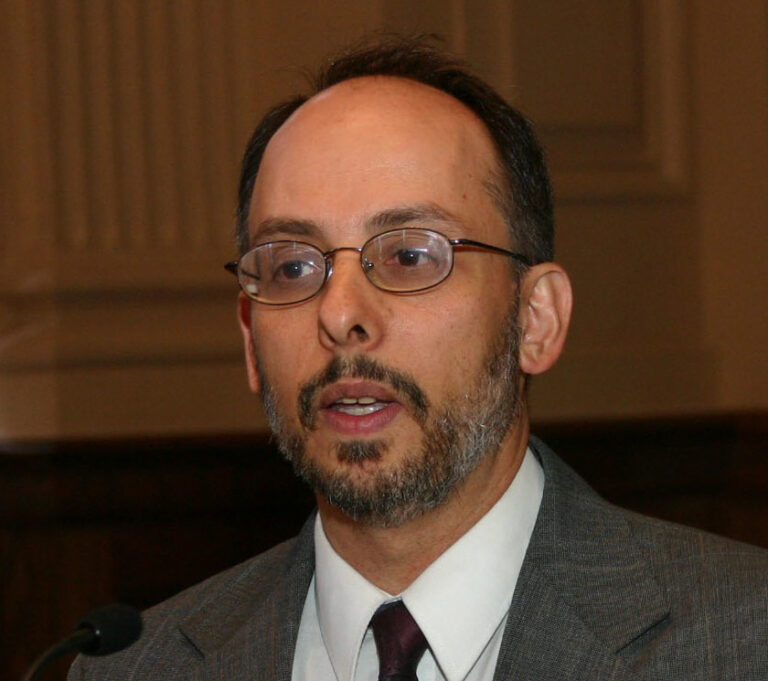
According to Medoff, "Using my book as an opportunity to inject anti-Zionism and force me to condemn Israel is an attack on a core aspect of my Jewish identity. This is antisemitism. Forcing Jews to disavow their connection to Israel recalls the way Jews were forced to disavow other aspects of their Jewish identity to be accepted into general society. It saddened me to see an editor at a leading publishing house choose to use such tactics."
Influencer Teams Threaten Publishers
Keene describes another mechanism harming Jews at major publishing houses: influencer teams now operating within these houses. "I've heard off-the-record stories about influencer teams telling executives they would refuse to work on a book because it was written by a 'genocidal Zionist.' They even threatened not to work on any book by the publisher if it signed such an author."
"The chilling effect is significant," Keene says. "There is an advantage in choosing a book by a non-Jewish author, even if it sells less. My book might sell a million copies, but cause financial damage to all the publisher's other books."
The silent boycott also extends to booksellers. Some independent bookstores refuse to display or sell books by non-anti-Zionist Jews, compared to shelves overflowing with Palestinian and anti-Zionist volumes—according to an article published this past April by two Jewish authors. The article noted that "bookstores in New York, Chicago, and Los Angeles have repeatedly canceled or outright refused to host Israeli authors and authors who publicly expressed support for Israel."

Keene says that in the publishing world, it takes about two years for a book to make the journey from manuscript to bookstore shelves. She explains that the initial freeze on sales to publishers in 2024 means that now "there simply are no new Jewish books written by Jews on the shelves." In Keene's eyes, recognition of the crisis will likely follow: "I was waiting for this moment, though not out of joy."
The Storm at the Writers' Organization
The storm surrounding the issue led to a crisis this past July at the writers' rights organization PEN America. A document from the organization documenting the exclusion of Jews, based on more than thirty interviews, sparked intense opposition and led to the president's resignation.
Over the first half of the year, PEN America gathered testimonies from Jewish authors and publishing personnel, including Meg Keene. On July 9, the organization published a report describing the crisis facing non-anti-Zionist Jews in the literary world, titled "A Silent Moratorium."
Following the report's release, PEN President and author Dinaw Mengestu immediately resigned in protest. Mengestu objected to what he described as blurring the line between Zionism and Jewish identity, arguing that the report's description provided legal ammunition against BDS participants. "One might expect a free expression organization to vigorously defend the right to boycott," he wrote. The union representing PEN America employees, which officially endorsed BDS in 2024, praised Mengestu for his resignation and condemned the report for "failing to align with the organization's values and mission."
For her part, Keene published an op-ed in the Wall Street Journal arguing that PEN's report was phrased in a way that downplayed its research findings. "They almost never say harm occurred to Jews," she argued, but rather that Jewish authors "feel" excluded. Mengestu, she says, "talks about protecting political speech, but doesn't protect the political speech of Zionist Jews."
"I Won't Publish Ideological Literature"
Faced with the harsh reality in the publishing industry since 2024, Jews are now taking initiative. Beyond Keene's new imprint, July also saw the announcement of Canary Publishing, founded by Jewish editor and author Howard Lovy.
Keene: "There are bodies in our community, like the ADL, whose job is the legal battle. Jews who were fired in the publishing world deserve support and compensation. But the most constructive thing is to create our own things."
Under Keene's leadership, her new sub-imprint plans to publish four to six novels in its first year across a variety of genres, including thrillers, romance, and literary fiction, alongside translated works from Hebrew. Its primary mission, according to Keene, is "to prove that great books by Jewish authors are being left off the shelves."
In response to what the imprint will not publish, she replies: "I won't publish ideological fiction, mainly because an opinion piece disguised as fiction is a terrible genre. Good fiction is about the internal experience." However, she adds, "I won't publish Jewish books by anti-Zionist Jews. They don't need our help, nor do I think they would want it."
"We Jews love our nuances," she says. "We are used to being able to argue about everything all the time, while the world asks us to say only one thing, very loudly. At the beginning of my novel, a man and a woman argue about books. Every Jewish editor said that was hot, and every non-Jewish reader asked, 'Why would you keep talking to someone who wants to argue with you?' I thought: there is nothing sexier. Obviously the man is interested.
"I want hating Jews to be a bummer. I want to throw launch parties in New York and Miami, and have people be sad they aren't on the guest list. If the choice is between being in a ghetto or not publishing books at all—we will publish, and we will make our books so good that they will stop excluding us. After all, Jews created the industry in Hollywood, and everyone rushed in. Many of the major publishing houses that aren't willing to publish us today were originally founded by Jews. We can do it again."