
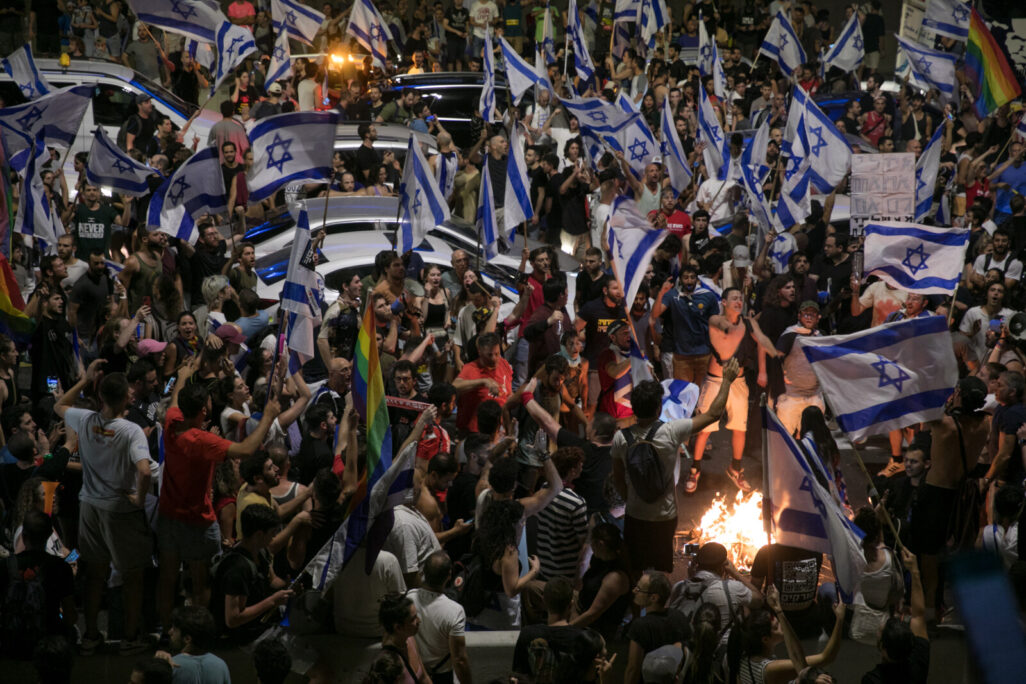
The broad protest movement against the judicial overhaul succeeded in mobilizing a wide segment of the public, establishing new frameworks and maintaining activities across the country. Opposition politicians attended the demonstrations and sometimes spoke at them, but generally remained guests of a movement that was careful to preserve its independence. Among supporters of the coalition, by contrast, movements operated in closer coordination with political parties and placed politicians at the center of their events.
The difference was also evident after October 7. The protests calling for the return of the hostages generally kept their distance from opposition parties. By contrast, when the Heroism Forum protested outside the Prime Minister’s Office, demanding that the government enter Rafah, government ministers joined the demonstration. “There is essentially a very impressive protest movement here, but with a very large disconnect between it and party politics,” sociologist Yaniv Ron-El said in an interview with Davar.
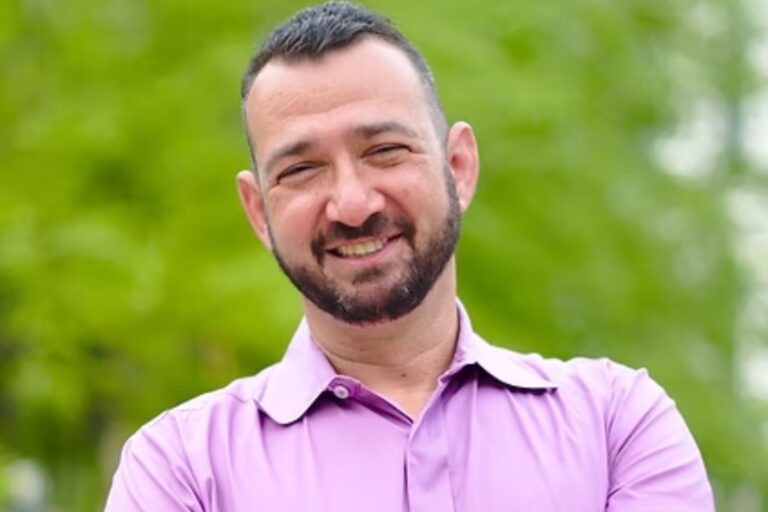
In an article he published in the journal Israeli Readings in January 2025, he links the gap to a longer-term process of the parties “emptying out from within”: the weakening of local branches, grassroots activity, party schools, and the ongoing ties with the public they seek to represent.
But this process has not affected all parties to the same extent. Social ties that had existed for years have also weakened within the coalition camp, but parties such as Shas and Likud still rely on community institutions or networks of activists on the ground. In the opposition camp, a protest movement with impressive organizational capacity emerged, but its ties with political parties remained more limited. How did the very public that organized in the streets become relatively disconnected from its representatives in the Knesset?
The Institutions Behind the Parties
“In the past, there was a deep connection between certain social movements and certain political parties. Parties were essentially the political representation of a particular social current,” Ron-El says. The Labor movement, for example, was linked to the Histadrut and its economic and social institutions. His article describes how, in the early years of the state, these ties also extended into education and healthcare, and how the parties’ social foothold gradually weakened.
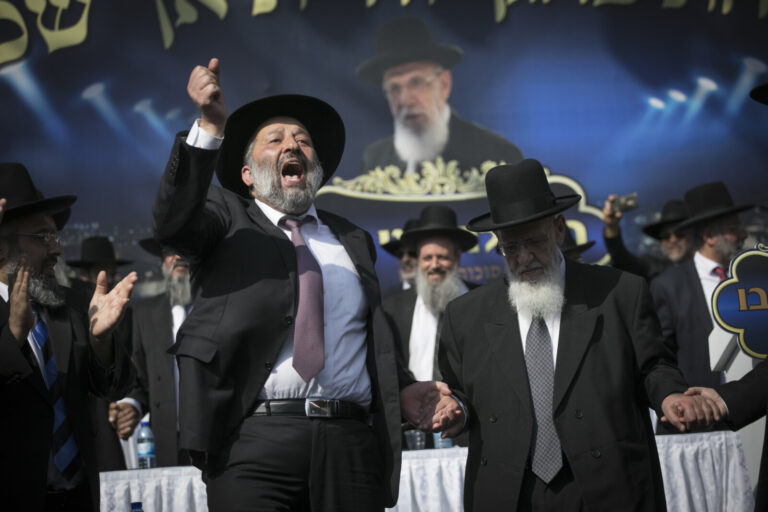
This is how Israeli politics largely operated. Parties were not merely electoral frameworks, but relied on social institutions and communities they sought to represent. Shas is presented as an example of the reverse process to that experienced by most parties: a party that built a social movement and frameworks in the fields of education and welfare. “Through political power and government funding, it essentially developed a social infrastructure of its own,” Ron-El says, mentioning the El HaMaayan network and its presence on the ground in study halls and other frameworks. “That infrastructure comes back in the form of social support for the party.”
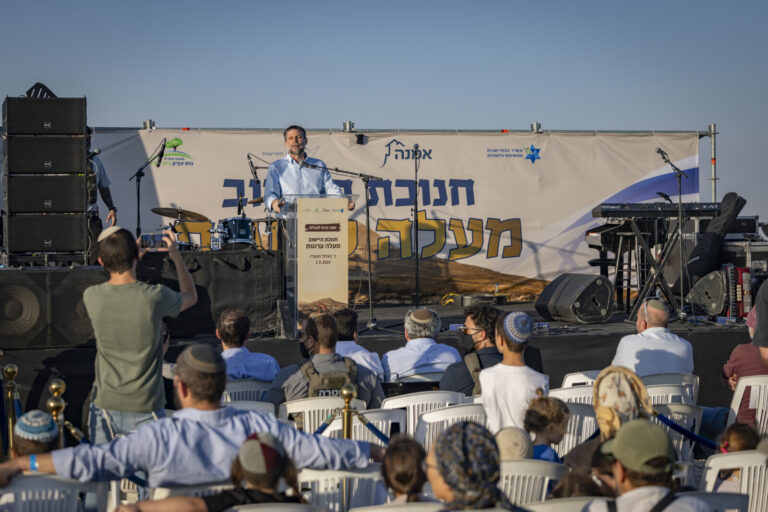
“When people think of a social movement, they imagine the civil rights movement or the 2011 social protest, but often influential movements are not found in the streets,” Ron-El says. He points, for example, to the settlement movement: “It is a social movement like any other movement, whose way of advancing its goals is by establishing outposts.”
According to the article, the settlement movement did not need to establish an independent political party in order to exert influence. Its representatives joined existing parties, and it gained a foothold in the National Religious Party and parties to its right, alongside establishing itself within state institutions. The establishment of settlements and movement activity became connected to party representation and the promotion of policy.
Different social infrastructures produce different parties. “A lot of people mistakenly lump the religious parties, Otzma Yehudit and Religious Zionism together, as Netanyahu was savvy enough to do politically, because there is indeed some overlap,” Ron-El says. However, the article distinguishes between the religious movement centered around the settlement enterprise, which is associated with Bezalel Smotrich’s party, and the urban nationalist-populist movement associated with Otzma Yehudit, which largely appeals to a traditional and religious population in the periphery.
In the former, he points to yeshivas and organizations such as Regavim, a pro-settler Israeli NGO that monitors and pursues legal action in the Israeli court system against any construction lacking Israeli permits undertaken by Palestinians in the West Bank; in the latter, organizations such as Lehava, a far-right organization that opposes Jewish assimilation, and the “South Tel Aviv Liberation Front.”, a far-right Israeli activist group that opposes African immigration and the presence of asylum seekers in the southern Tel Aviv neighbourhoods. According to Ron-El, the very existence of these institutions and Ben-Gvir’s association with them, even if they appear small and marginal, have created an ideological clarity and authenticity that representatives of centrist parties sometimes lack, as they prefer to be identified as professional and neutral.
A Broad Public Seeks Politics Free of Politics
Why does a public that knows how to organize and take to the streets in large numbers keep its distance from political parties? The article offers practical explanations for this: political independence allows the protest movement to appeal to a broad audience, avoid conflicts between supporters of different parties, and emphasize that the struggle concerns the rules of the political system, rather than merely the identity of those in power. The separation can also allow for a division of labor between protesters and politicians conducting negotiations.
But there are also costs to the separation. The turnover among centrist parties illustrates the difficulty of translating even electoral success into a consistent and effective political framework. Parties such as Kadima and Blue and White amassed significant electoral strength, but struggled to maintain it.
Yesh Atid, in Ron-El’s view, is precisely a counterexample. “It succeeded and was savvy enough to build a grassroots infrastructure for itself by investing in party activists.” According to him, this infrastructure helps explain both its survival and its strength in alliances with other parties: it brings with it not only a leader and candidates, but also a network of activists and local connections.
")
Ron-El links the difficulty of maintaining party structures to attitudes toward politics among parts of the liberal and middle-class public. “This is a public that has a strong aversion to politics, a strong aversion to power struggles,” he says. An aversion to political deal-making and internal struggles is accompanied by a promise of professional leadership, in which the leader selects people presented as worthy and possessing management skills.
“Look at Eisenkot or Bennett. They bring in CEOs; that’s all technocratic management,” Ron-El says, asking: “Do you have any idea what Keren Turner thinks about the issue of the territories?” In this way, professional qualifications can push political questions aside: Which public do the candidates represent, and what goals are they seeking to advance?
In the right-wing movements examined in the article, the connection between the public and political goals is more visible. Settlement, educational institutions and community life are ongoing projects that political activity is intended to advance. This also creates a willingness to accumulate power and use it: a struggle over a budget or policy is part of the effort to expand and consolidate the social enterprise.
This connection also creates continuity. Shas, for example, used its political power to expand its educational and community infrastructure. Even when representatives and political alliances change, the organized public and its institutions remain. They provide the party with support and expect it to act on their behalf. In this way, an ongoing connection is created between social life and politics, one that is maintained even between election cycles.
The Protest Movement Does Not Disappear When It Changes Form
The distance from political parties does not mean that the protest movement failed to build institutions or that its achievements are limited to demonstrations. Ron-El rejects the characterization of the movement as mobilization around temporary events. According to him, “an organizational infrastructure is being created there that is later used for other things.” After October 7, the frameworks and connections built during the months of protest were used for civilian assistance and later also for the campaign to bring the hostages home. The activity changed its form and goals, but the infrastructure continued to exist.
The relationship with political parties is also changing: activists from the 2023 protests and the campaign to bring the hostages home joined the candidate lists of various opposition parties. Ron-El points in particular to the Democrats party, where a more direct connection to the protest movement is evident: its senior members participated in the protests, and through its primaries, activists who emerged from the movement, as well as many protesters who joined the party, became involved in its political ranks.
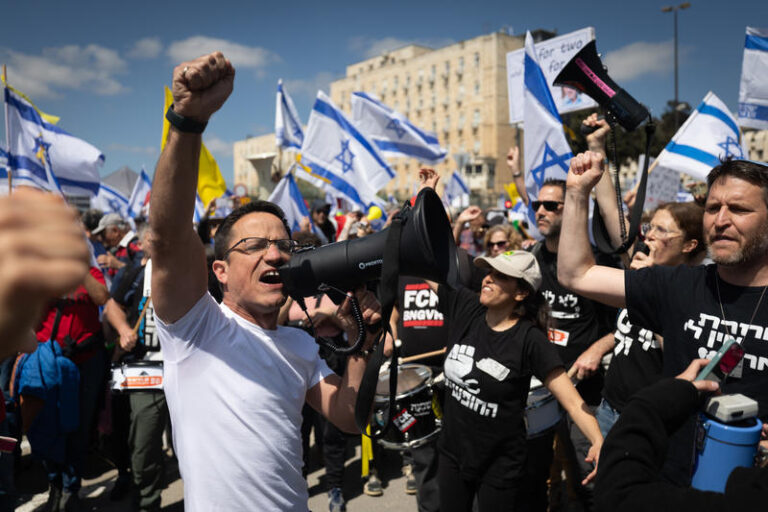
This integration opened up the possibility of an ongoing relationship between the party and the social frameworks built in recent years. The article describes a relationship in which movements bring with them activists, grassroots connections and public support, while parties advance their goals within the political arena. Such a relationship continues to exist even when the party comes to power. A movement can support a government while simultaneously putting pressure on it, as right-wing movements have done by demanding that ministers advance their goals and even inviting them to demonstrations.
For the public that organized through the protest movement, the next test will no longer be merely its ability to bring people into the streets, but its ability to turn the civic power it has built into sustained political power, capable of exerting influence from within the parties as well as after the election.