
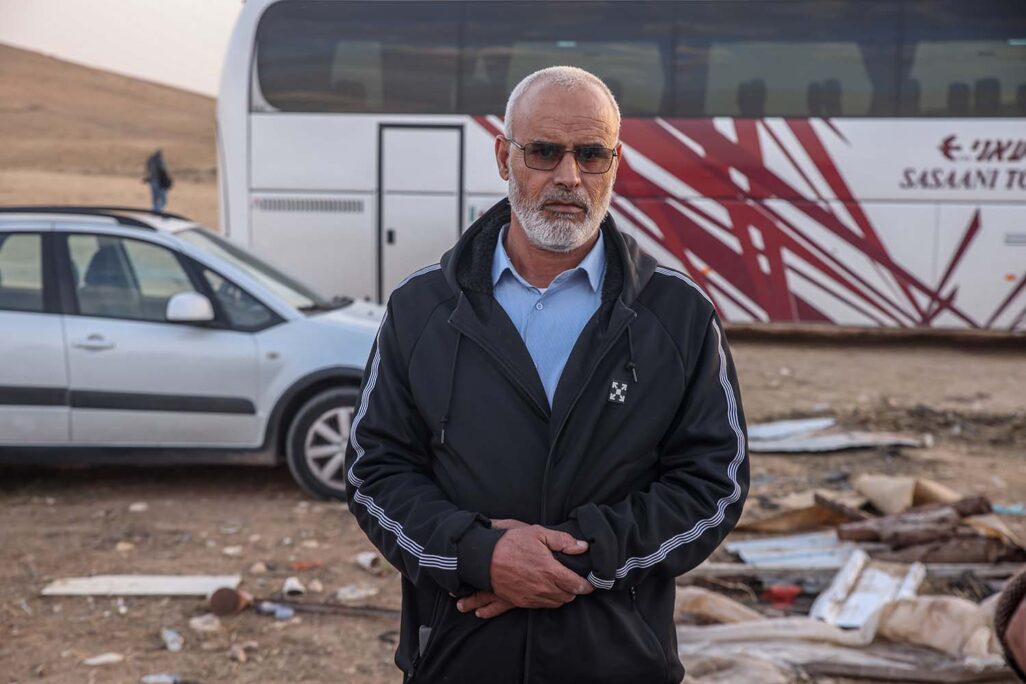
It is midday in the village of Abu Talul. Ali Abu Sabila's home stands on a small hill overlooking the family compound in the village. The silence is occasionally broken by the chirping of a bird. Abu Sabila, 66, sits down with a smile that gives way to an expression of pain as he begins to tell the story of the day he lost his nephews, Amar Abu Sabila and Mussa Abu Sabila, on October 7, 2023.
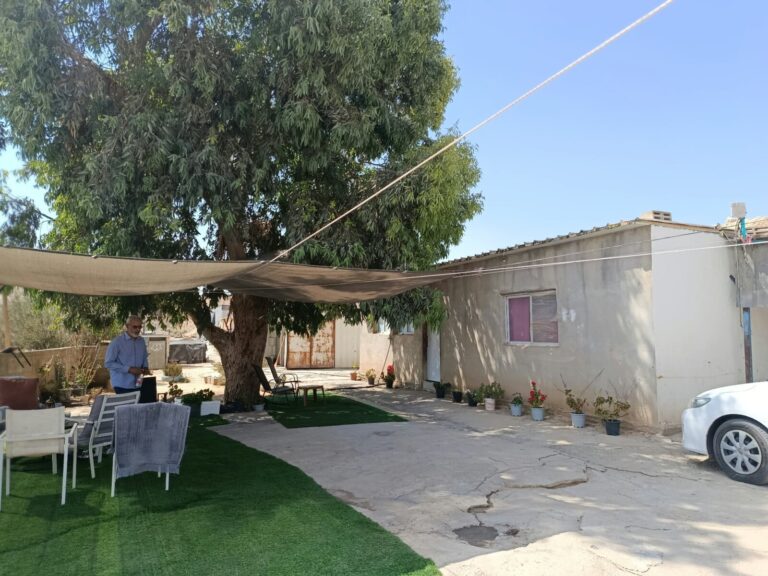
That Saturday, the family got up from the mourning tent. “One of the family members had passed away, an elderly man. It was the last day of the mourning tent, and we wanted to take it down that day. That morning, we heard missiles. We hear missiles here from time to time, but not in such large numbers.”
Amid the panic and uncertainty, he recalls, “Everyone was thinking about their children who worked there. My son worked at Kibbutz Magen, and my nephews were also in the area that day. At around 8:30 or 9:00, we realized that something had happened in Sderot and at the Re’im Junction. We knew Amar was there, and his brother was there too. His brother left as soon as he heard the sirens and managed to call his father and tell him he was on his way.”
On his way home, his brother came across the late Odia Swiss, who was stranded in a car in the middle of the road with her two daughters after her husband, the late Dolev Swissa, was murdered. He informed Amar, who told him to hurry home. “Later, we found out that Amar had taken the woman toward the police station. She had two little girls.” At the police station in Sderot, Hamas terrorists fighting there opened fire on them. The girls hid in the car. Omar and Odia were killed in the shooting.
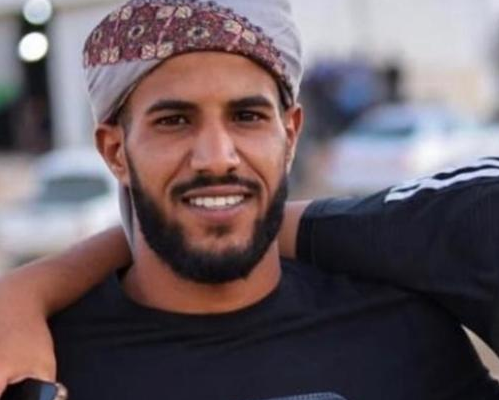
“I don’t know exactly what happened, but he tried to get out of there and didn’t make it in time. They said they found his car without any signs of gunfire.”
Ali Abu Sabila recalls hours of confusion and uncertainty. “We didn’t know whether he had been taken or not. Only in the afternoon or on Monday did they tell us. There was a lot of chaos, and we didn’t know exactly what had happened. We held on to hope all that time. Only after 17 days did we know that he had been found.”
Two Nephews Were Killed That Day
That same day, October 7, Mussa Abu Sabila also set out for the area of the fighting. “Mussa was with us in the mourning tent,” Ali Abu Sabila recalls. His brother and nephew were at Kibbutz Magen. The brother left when the shooting began and made it as far as the Re’im Junction. He was shot at and his vehicle was hit. He fled into the orchards and called Mousa. He told him, “Don’t come by car.”
“When Mussa arrived at the junction, he was also hit. He managed to call and ask someone to come pick him up. Everything was already closed off. Not long afterward, his phone stopped working.” Ali says that there were other family members there as well, but on their employer’s advice, they waited until the afternoon and fled south. They found Mussa a week later.
“They called me at around three o’clock. I arrived at the base at around six,” Ali says of Amar Abu Sabila. “They had already identified him. We prepared him for burial. We got here at nine that evening and buried him. I didn’t want to tell people, but a lot of people came. A lot of people knew him. He had many friends in central Israel. Everyone came that night.”
“We miss Amar. He was the leader of his group of friends. He worked in central Israel and on weekends, he would take over for his father and brothers while they were on guard duty in Sderot. Everyone remembers him. Everyone talks about him.”
Three years after that October 7, the family is trying to rebuild their lives and preserve their memory. “Amar had three young children. One was born five months after he was killed. Mussa had six children. They know the story, but they still haven’t fully processed it. I tell them about it. They don’t understand.” By contrast, their names come up frequently in conversations among the adults.
Ali Abu Sabila is helping raise Mussa’s children. “One of them is getting married in two months. I see them at the school there.”
Alongside the Loss, the Struggle for Home and Life in the Village
After the support the family received following October 7, the struggles against government policy toward Bedouins once again became a central part of their lives. Over the three years since then, that struggle has not stopped. “What’s difficult is the demolition of the homes,” Abu Sabila says. Two years ago, he was forced to demolish the house he had built for his son. “They said it was possible to build, but then suddenly they came with a demolition order. He postponed his wedding for a year.”
According to him, the impact is felt especially by the children. “Every police officer who comes, every tractor, they think they’ve come to demolish the house. I explained to the police that they need to meet with the children at the school, sit with them, and get closer to them.”
Abu Sabila also speaks about the various plans for regulating Bedouin communities, but says that trust in the authorities is low. “People here don’t trust the Bedouin Authority.” He points one by one to patches of ruins that were once homes and says, “You cannot build your happiness on someone else’s deprivation.”
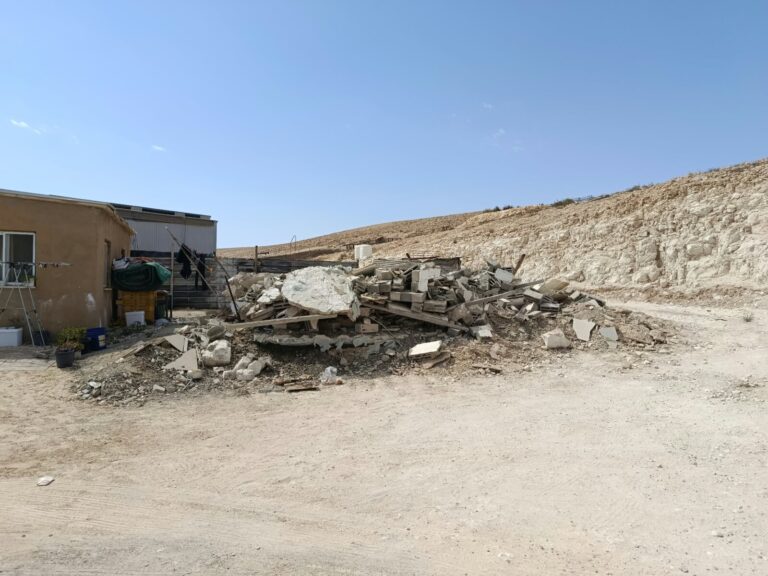
The state of the infrastructure in the village also illustrates the gap, in his view. In the background, the sound of cars jolting over the potholes can be heard on the dirt road leading to his home, which serves as the neighborhood’s main road. “We are a recognized village, and they haven’t even paved a road. In the end, we filled the potholes in the road ourselves.”
According to him, the difficulty of getting from place to place also affects the education system. He describes children dropping out of school because of the difficulty of getting there. “There has been a steep decline in education. There is dropout from school, both hidden and visible.”
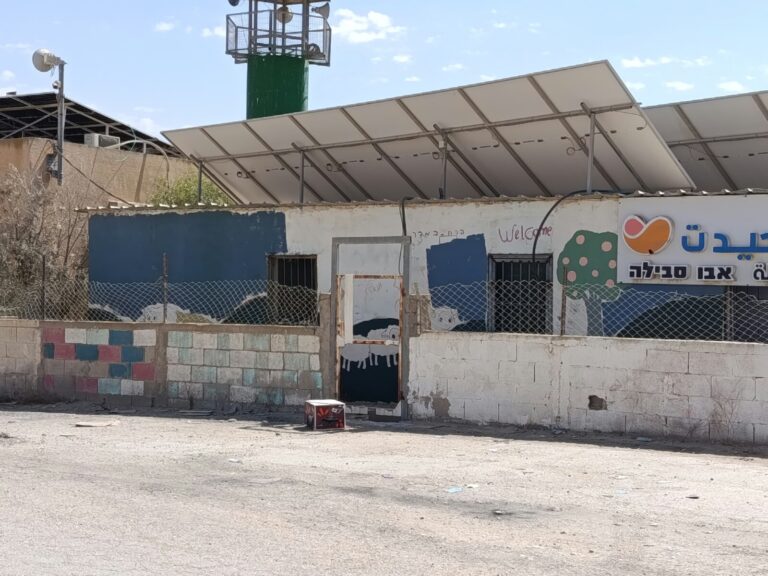
Against the backdrop of this shortage, Ali built a kindergarten at the entrance to the village. “I had a grocery store, and I turned it into a kindergarten. My wife cleaned the kindergarten without pay. Every morning I came to start the generator, and in the afternoon I came back to turn it off. I ran the place for five years, but I can’t continue anymore. The Education Ministry and the council are unwilling to operate the kindergarten.”
Alongside the difficulties, Abu Sabila also speaks about Jewish friends who have kept in touch with him. “I have many Jewish friends. But lately, fewer of them come to visit.”
Despite the loss and the difficult reality, he says he wants to keep looking ahead. “I look to the future with hope. We can’t keep pulling everything to the extremes. Each side needs to give a little. I want to build a home and raise my family.”