
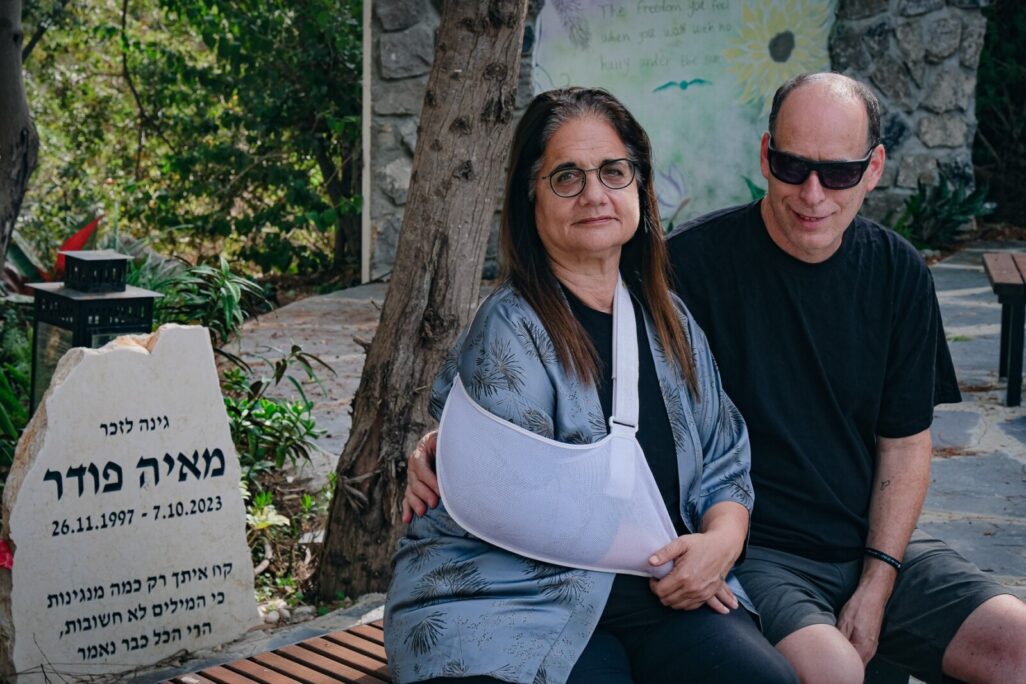
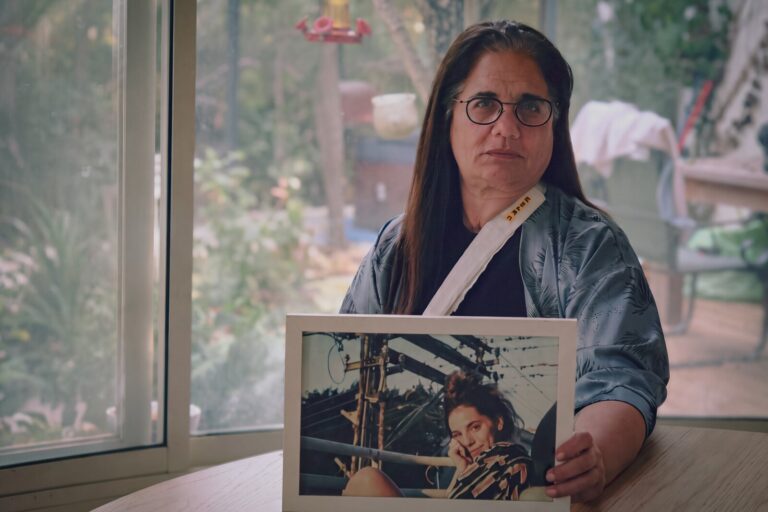
Ayala Puder arrived at the Nova festival site just days after the end of the 30-day mourning period for her daughter Maya, who was murdered outside the Re’im bomb shelter. The desire to understand exactly what had happened overshadowed her concerns about security, and Puder, who lives in Zikhron Ya’akov, decided to travel south—to the place where she lost her daughter.
Maya, a 25-year-old film student with an endless passion for parties, arrived at the Nova festival with her friends Rotem Neuman and Lior Bar Or. Neuman was also murdered, while Bar Or survived but was wounded.
“Even though the site was still a closed military zone, tours were already being held there,” Puder tells Davar. “Groups from Israel and abroad came, and there was a guide standing there who said something along the lines of: ‘There were drunk and drugged young people here—that’s why they didn’t run away.’ It infuriated me. He had no knowledge whatsoever of the nature parties, the values behind them, or the people who attended them. Just headlines: drugs, alcohol and young people.”
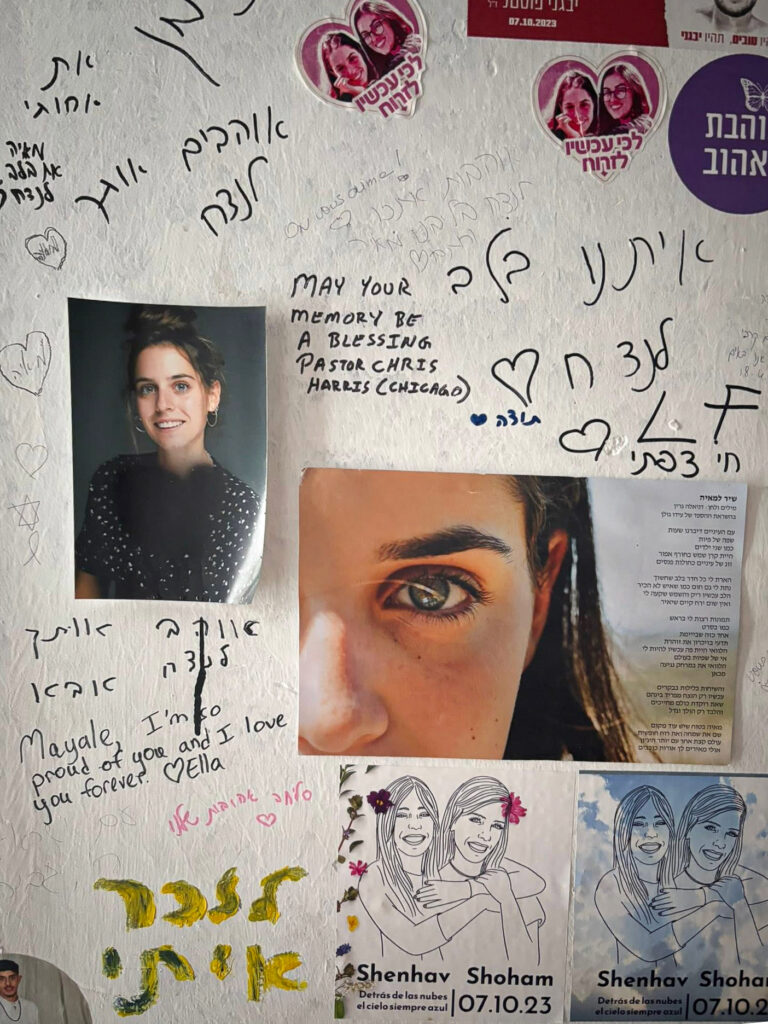
Puder was deeply shaken by the way the memory of the massacre began to take shape right before her eyes, so soon after it happened. That painful experience motivated her to establish the “Re’im LaDerech” initiative, whose goal is to tell the personal stories of those murdered at all the parties held that weekend: Nova, Psyduck and Mushroom, as well as the crew that was in the area preparing the site for the Midburn festival, which was scheduled to take place the following week. According to the Nova Tribe Community Association, 414 people were murdered at the parties, including members of the security forces, and around 3,500 were wounded.
“Telling the story is not giving a tour; it is bearing witness,” Puder says. In her view, that testimony is part of shaping the national memory of October 7: “The narrative is being determined now—the narrative of our nation, not just Maya’s narrative.”
“It’s Important to Me That They Understand What We Lost”
The initiative she founded expanded rapidly. With the assistance of the Tourism Ministry, special training was developed for tour guides and for dozens of parents who wanted to tell the stories of their children. Experts in the world of nature parties, survivors, and representatives of ZAKA also took part in the process. Puder herself led more than 100 tours before deciding to take a break. She is also involved in developing the memorial space at the festival site.
“The parties weren’t intended only for young people,” she emphasizes. “The youngest person was 16 and the oldest was 73. There were male and female soldiers, young people who had recently completed their military service, students, professionals with bachelor’s degrees and people with doctorates.”
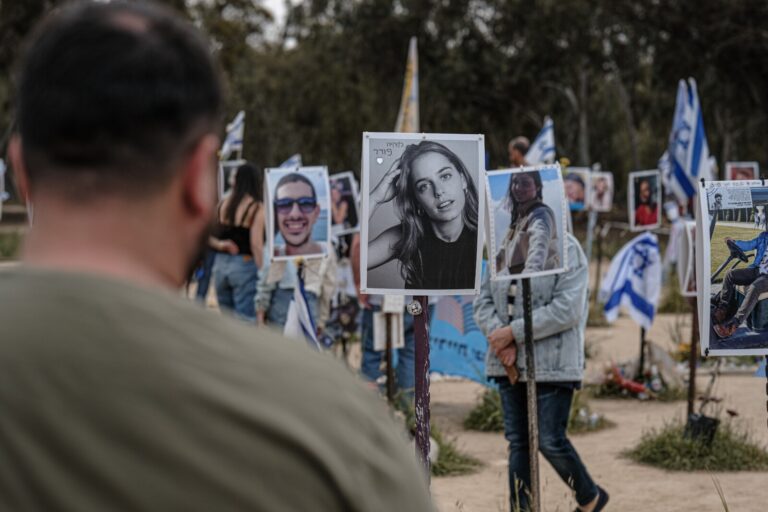
Over time, Puder’s dynamic with the groups changed. At first, she says, visitors to the site mainly listened. Today, three years later, people often ask her to talk about politics as well and about how the event changed her views. Puder says she does not feel comfortable with such questions. “In my stories, I make sure to separate the two,” she says. “When a group comes for a geopolitical tour, that is defined in advance, and there is a guide who provides that context. My Maya was not a political person. There were around 4,000 people at the party, around 400 of whom were murdered—religious and secular, Arabs and Jews, Israelis and people from abroad. I don’t know what their political views were, and I can’t represent the politics of any of them. I tell the story of Maya’s life: what was important to her, what she loved, whom she loved, how much she laughed, how positive, successful, smart and silly she was.”
However, there is one thing about Maya that her mother deliberately avoids talking about: the moment Maya was murdered and the way her body was found.
“For the Birthright youth groups, the evangelical groups and the other people who felt it was important to come all the way here to meet a parent, it’s important to me that they understand what we lost, what kind of girl she was and what kind of people lived here. People who contributed, created, dreamed, achieved their dreams and wanted to achieve even more. Maya was a center around which hundreds, perhaps thousands, of people gathered.”
“There were soldiers, but there was no army; There were police officers, but there was no police force”
Three years have passed. Puder describes life since then as two parallel worlds: “In one, we are still there, in October 2023; in the other, time moves forward.”
According to her, one of the things that has been affected, both for her and her husband, Avi, is their memory: the difficulty of associating events with dates and placing them chronologically. She has encountered the same phenomenon among bereaved families and other survivors she has met—the passage of time does not ease the loss and makes it difficult to focus on the small things of everyday life. Questions such as “Who did I meet?” and “When?” become swallowed up in a past that feels like the present.
“The grief doesn’t stay the same, it grows,” Puder says. “People say that two and a half or three years have passed, but the pain and the absence grow. We grow older, the children grow up, Maya’s friends get married and have children. Those who started their degree with her have already graduated and are starting to work. Maya only had time to complete her first year.”
Another significant change Puder has gone through is that, since October 7, she has not returned to her work as an interior designer. Her husband chose to retire. The home has changed as well. The large holiday meals and family Friday-night dinners have changed, become smaller, and sometimes been canceled altogether.
“It’s simply too difficult,” says Avi. “The holidays in this house used to be a carnival. Today, everything carries a sense of missed opportunity, longing or memory.”
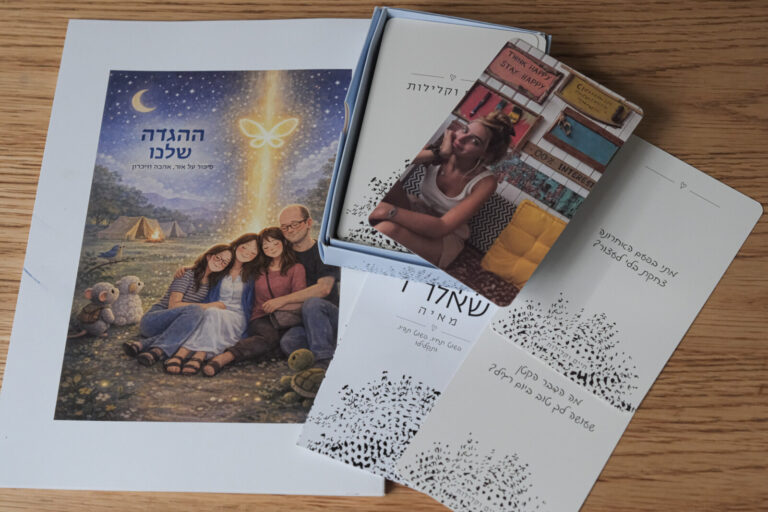
Their two other daughters are also undergoing changes and transitions. Elia, 27, had planned to study medicine before October 7, but following the disaster, she changed direction and is now studying ceramics, influenced by an art therapy group for bereaved sisters that she joined. Hilleli, 20, is still serving in the army. Puder still struggles to come to terms with Hilleli’s military service, partly because of her anger at the systems that were supposed to protect her eldest daughter and failed.
A sense of anger has accompanied Puder over the past three years. “At first, I felt nothing but grief,” she recalls. “But as time went on, there were outbursts of anger.” During the investigation into the massacre, she had lengthy conversations with the head of the Nova investigation at Lahav 433. “Throughout the conversation, he kept saying, ‘I’m asking you to trust me and the investigation.’ I told him: ‘On a personal level, I believe you, but I have no trust in any of this country’s systems, not the army and not the police.’
“Someone was supposed to ring every alarm bell, and someone else was supposed to hear it, draw conclusions, stop the party or protect it. There were soldiers there, but there was no army; there were police officers there, but there was no police force.”
“Today I Understand How Naive I Was”
Avi says that the demand for an investigation arose in him almost immediately after the massacre: “During the week of the shiva, I already said that I wanted a real and effective commission of inquiry. I was still optimistic then. Friends told me it wouldn’t happen, and I thought they were crazy. Today I understand how naive I was.”
When asked if he thinks a commission of inquiry with credible conclusions could make things easier for the families, Avi responds, “I expect the commission of inquiry to expose both what happened that day and the entire strategy toward Hamas over the years. It needs to bring the stories to light and punish people who failed to fulfill their duties, military and public officials who betrayed their responsibilities.
“I’m not determining in advance exactly who is responsible; that is what an investigation is for. But today, they are preventing the very possibility of holding an investigation. A commission will not bring Maya back or ease our grief. But it can give us hope that this will not happen again, and create deterrence against repeating the same mistakes.”
For his wife, the title of the commission is less important (an issue on which she and Avi disagree); what matters is that it investigates: “Let it be a state commission of inquiry or a national commission. But it must have authority, and it must have teeth.”
The couple agree that the investigation and remembrance are not two separate struggles. They are both also concerned with what will remain of the disaster once those who were there are no longer here to tell the story. One of the places where this question takes on a physical form is Route 232. Puder is involved in the campaign against removing the bomb shelters that remain along the road, a step that the Eshkol and Sha’ar HaNegev regional councils want to advance.
“It’s a difficult debate,” she says. “If they remove them, it will be a sin for generations. Their presence across this vast landscape is a reminder that all of it was overrun. I want my grandchildren to travel from one bomb shelter to another and see the road, the landscape, the distance, the power and the scale.”
“From my perspective, concealing the truth about what happened that day, in the weeks and years that preceded it, is the worst thing that could happen, and it is already happening. We see how history is rewritten in other countries, and we also see attempts here to say that there was no massacre. At the rate at which politics and demographics are changing, it may be that in a much shorter period of time there will no longer be anyone who can say, ‘You are rewriting history.’ The distorted version may even become the accepted truth.”
Puder tries not to let the anger grow because “it consumes every good thing.” She and Avi also try, as much as possible, to distance themselves from the news broadcasts and headlines: “I want to be with Maya’s life, with her goodness, with her eyes and with her laughter. On the other hand, I am raising two other daughters here, and we have family members and granddaughters. This is my country, and this is our country. If we want to learn, change and become better, we have to confront our own mistakes.”