
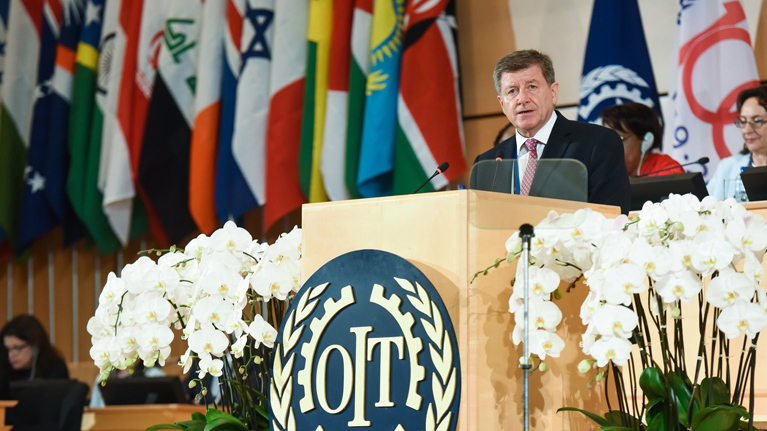
At the end of September, the International Labor Organization (ILO) signed an agreement for the first time to cooperate with private-sector entities to promote fair living wages across global supply chains. The agreement was signed with the Unilever Group, as well as the business organization coalition amfori and the Responsible Business Alliance (RBA).
The cooperation agreement aims to translate the conclusions of the joint committee, which brought together member states, workers’ organizations and employers’ organizations, from statements of principle into practical action. The committee concluded that minimum wages in many countries do not ensure that workers can actually afford a decent standard of living. Accordingly, the ILO seeks to promote a reassessment of wage policies in relation to the cost of living and work to narrow the gap. The goal is to connect private initiatives across global supply chains with national institutions that influence minimum wages, collective bargaining and social dialogue in producing countries.
Unilever is a British multinational corporation and one of the world’s largest companies in the consumer goods sector, including food, personal care and cleaning products. amfori (formerly FTA) is a leading global business association promoting open and sustainable trade, bringing together approximately 2,400 retailers, importers and brands operating in more than 50 countries. It is also known for its Business Social Compliance Initiative (BSCI), a supply chain management system that helps companies monitor, assess and improve workplace standards and compliance with social standards.
The RBA is the world’s largest industry coalition dedicated to corporate responsibility in supply chains. It originally emerged in the electronics industry, where it was known as the EICC, and has expanded over the years into additional sectors, including automotive and retail.
Roadmaps for Promoting Living Wages
Under the cooperation agreement with the ILO, the organization will convene roundtables in the main production countries where suppliers working for Unilever operate, bringing together governments, employers’ organizations and workers’ organizations. Together, they will develop roadmaps for promoting living wages, strengthen collective bargaining systems and examine local challenges that contribute to low wages, such as the scale of the informal economy and low productivity, with the aim of finding ways to address them.
As for amfori, the ILO will help align its independent methodology for calculating fair living wages with the principles established by the organization, and will assist in providing reliable wage data from producing countries. The ILO will work with the RBA’s task force to provide coalition members with data-based wage assessments and guidelines to help them implement consistent living-wage policies throughout their supply chains.
“Promoting Living Wages Is Critical”
“At Unilever, we recognized long ago that promoting living wages is critical to building strong supply chains and supporting decent work. Meaningful progress depends on finding shared solutions that incorporate the perspectives of workers, employers and governments. Together, through this partnership, we aim to translate aspirations for fair living wages into practical action and provide greater clarity on the role different stakeholders can play in driving sustainable development,” said Rianne Buter, Unilever’s Global Vice President of Sustainability.
“We spend far too much time repeatedly calculating living-wage estimates and then debating the results. If we can establish a common, reliable benchmark, grounded in the ILO’s definition and methodology and drawing on national wage-setting institutions, we can focus our time and resources on what really matters: supporting businesses and their partners in translating their commitment to paying fair living wages into practical action. By combining amfori’s supply chain experience and broad membership reach with the ILO’s expertise and locally grounded approach, this partnership can help drive long-term progress on a broad scale,” said amfori President Linda Kromjong.
Rob Lederer, CEO of the RBA, said: “The RBA looks forward to working with the International Labour Organization on this important project, which aims to support a data-driven approach to wage-setting across global supply chains.”
Peter Lerner, Director General of the Histadrut’s International Relations Division, said: “The ILO’s engagement with private multinational companies could be an opportunity for Israel to take part in standardization that benefits workers around the world, as part of a broader effort to create a fair global trading system that offers opportunities throughout global supply chains.”