
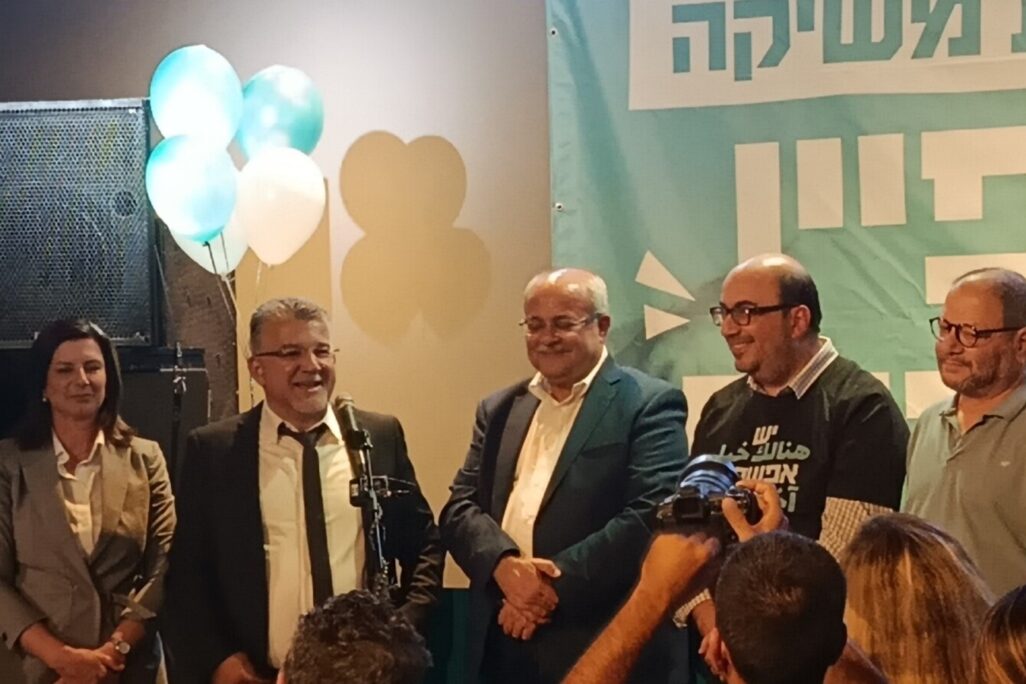
The Joint List launched its Hebrew-language campaign at the start of October, seven days after Sami Abu Shehadeh was disqualified and the list was approved to run in the elections. Abu Shehadeh, who withdrew his candidacy for the Knesset but continues to lead the Balad party and is considered a leading figure in the Joint List, was at the center of much of the event. Several candidates linked his disqualification to a broader struggle for democracy.
“The disqualification is political persecution directed against the entire Arab public and the entire democratic Jewish public,” said Professor Yousef Jabareen, chair of the Joint List. Other speakers at the event also addressed Abu Shehadeh’s disqualification, linking it to the struggle for democracy.
“The Disqualification Is Political Persecution”
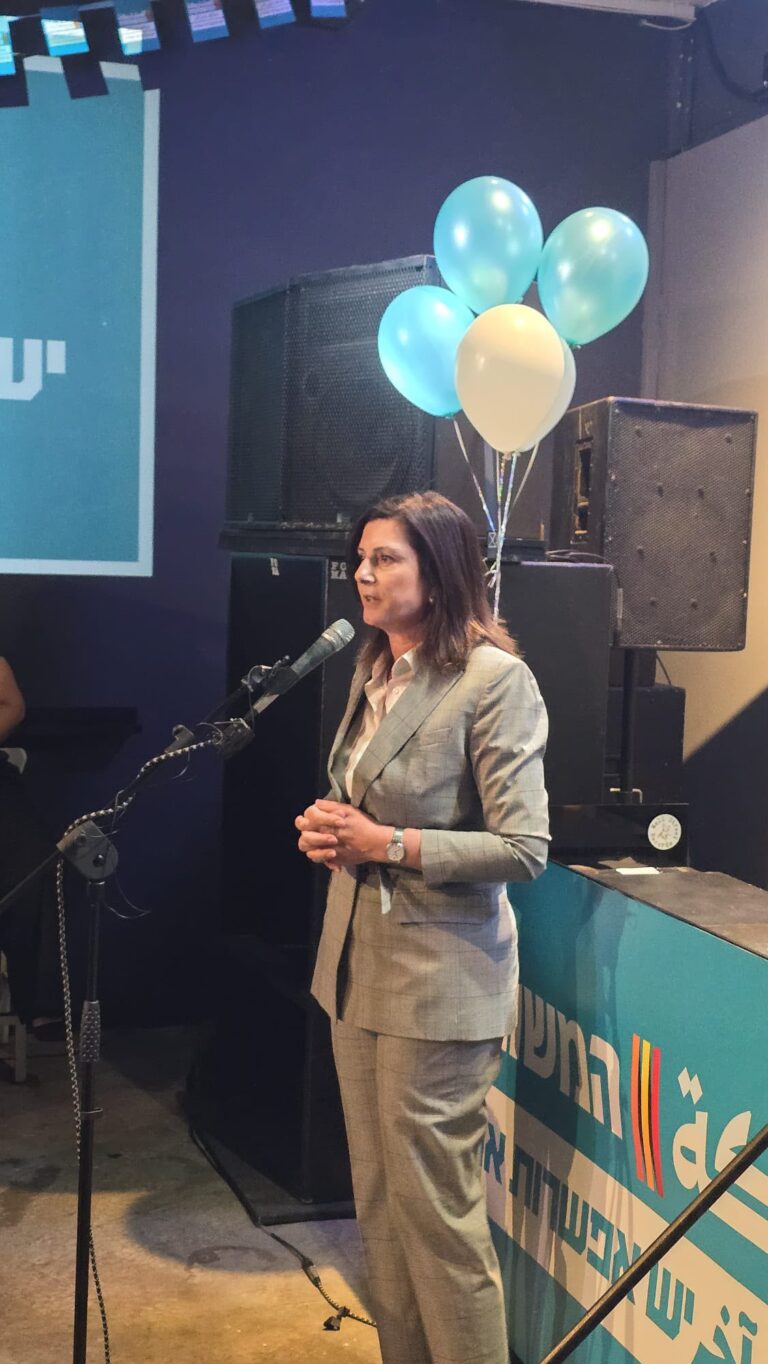
Maha Karkabi Sabbah drew a connection between violence against Palestinians and the disqualification. “They burn olive trees. This is an ideology of ethnic cleansing and persecution of Palestinians wherever they are. The ethnic cleansing also reaches Arab citizens of the State of Israel, including within the walls of the Knesset, where all minority parties, representing 20% of Israel’s citizens, were disqualified in a single day.”
She added that “the groundwork for the disqualification was laid during the judicial overhaul, with the dramatic changes that took place at the Supreme Court.”
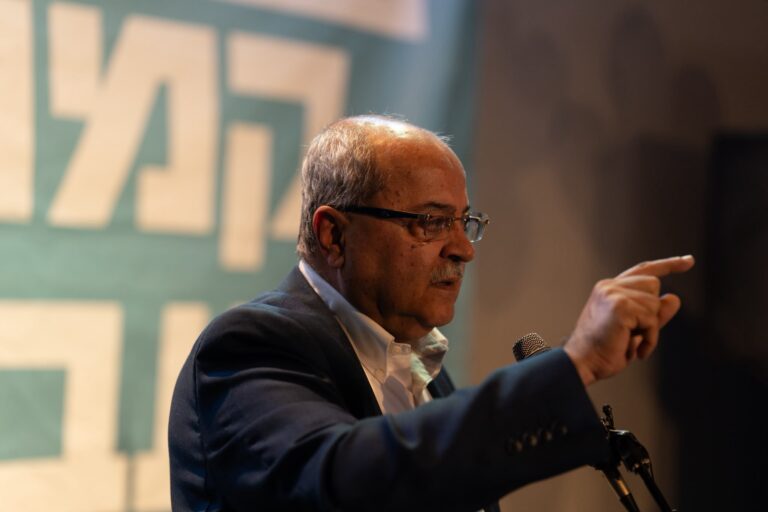
MK Ahmad Tibi focused his message on two central pillars. “We stand on two legs,” he said. “One leg is social justice and personal security, and the other is opposition to the occupation and the ongoing war crimes in Gaza and the West Bank.” However, the list’s economic and social platform was not elaborated on during the event.
Tibi added that the list also seeks to reach out to the democratic Jewish public. “We are the address for all democratic Jews who want a party that opposes the war and supports social justice,” he said. MK Dr. Ofer Cassif added a call of his own: “Leftists, come home, to the Joint List.”
“We Will Consider Recommending Anyone Who Did Not Support the Disqualification”
Tibi also discussed the steps the list intends to pursue if it enters the Knesset, saying it plans to act differently than in the past. “We will do things we haven’t done before,” he said. “One of the first things we’ll do is remove the current Knesset speaker.”
In response to a question about recommending a candidate for prime minister and the possibility of providing a safety net for the change bloc, Jabareen said, “First and foremost, we are the safety net for our own public and for the democratic Jewish public.” Abu Shehadeh added with a smile: “We will consider recommending anyone who did not support the disqualification.”
Abu Shehadeh also addressed the significance he attaches to Jews voting for the list. “A Jewish vote for the Joint List is not just another vote; it is a vote of hope that there are Jewish partners in the struggle for democracy,” he said. “Our historic role is to show that another possibility exists—one of peace, of justice, with light at the end of the tunnel.”