
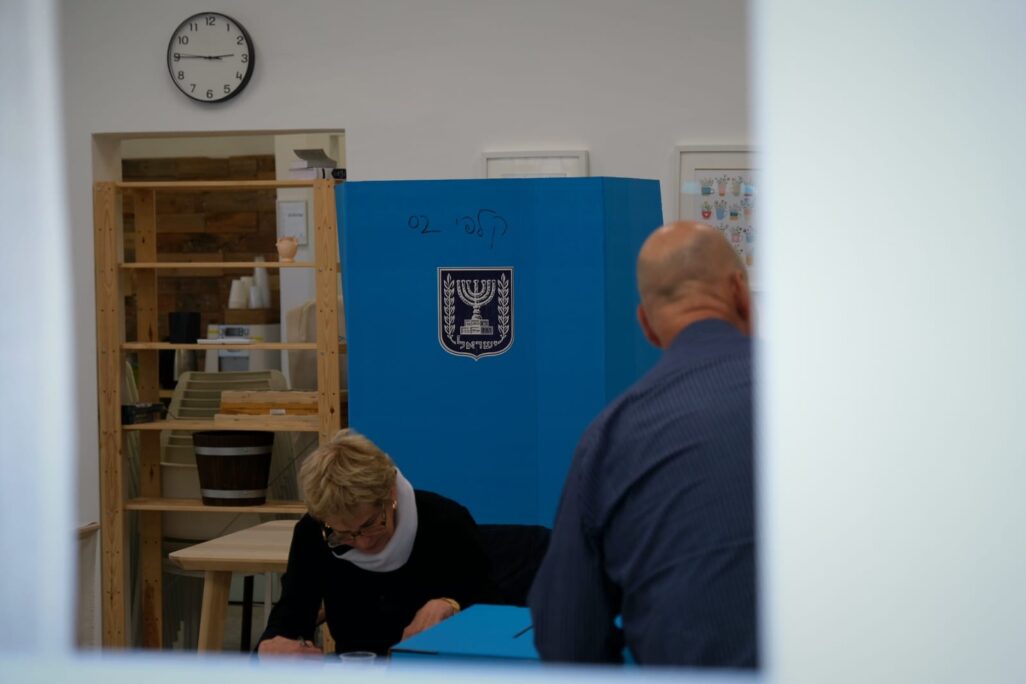
Election season brings not only dilemmas at the ballot box, but also a long list of questions about workers’ rights on Election Day: Can an employer require an employee to work while everyone else is on their way to vote? Who is entitled to double pay? How can workers ensure that temporary work for a political party does not end in withheld wages? And where is the line between political freedom of expression and what is appropriate around the office break room?
From the constitutional right to a day off to the employment of teenagers in election campaigns, this comprehensive guide will clarify citizens’ rights on Election Day so they can exercise both their democratic rights and their rights as workers.
Is Election Day a paid day off at the employer’s expense?
Yes. The Basic Law: The Knesset establishes Election Day as a day of rest. This means employees are not required to come to work on that day. An employee who has worked for the same employer for at least 14 consecutive days immediately before Election Day is entitled to their regular pay for that day, without it being deducted from their annual leave balance.
When does Election Day begin and end?
The law does not specify the exact starting and ending times of the day of rest, but the prevailing legal interpretation is that it corresponds to polling hours, meaning between 7:00 a.m. and 10:00 p.m. In localities or institutions where polling stations close earlier (at 8:00 p.m.), the legal interpretation may reflect those hours accordingly.
My employer is requiring me to work on Election Day, even though I don’t want to. Is that allowed?
It depends on the type of workplace. Ahead of each election, the Central Elections Committee publishes a list of “public services” that continue operating as usual, such as public transportation, security and emergency services, hospitals, communications services, water and electricity utilities, as well as restaurants, cafés and hotels. If your workplace appears on this list, your employer may require you to work. If it does not appear on the list, your employer cannot compel you to do so.
If I work on Election Day (voluntarily or because I’m required to), how should I be paid?
Labour court rulings establish that an employee who has worked for at least 14 days before the election and works on Election Day is entitled to special compensation. This also applies to employees in public services who are required to work that day. The customary arrangement is payment at a rate of 200% (double pay for the hours worked), or alternatively, regular pay (100%) plus compensatory leave equal to the number of hours actually worked that day. This does not apply to foreign workers in the caregiving, construction, hotel, catering, agriculture and industrial sectors.
How is overtime pay calculated on Election Day?
This issue has not yet been decided by the National Labour Court, so there is no clear answer. One legal interpretation holds that the overtime premium on Election Day should be calculated based on double pay — meaning 250% of the regular rate for the ninth and tenth hours, and 300% for each additional hour. However, others argue that pay for the ninth and tenth hours should amount to just 225% of the regular rate, with each additional hour paid at 250%.
However, members and secretaries of polling station committees, election integrity inspectors, polling station supervisors, security guards and ushers employed by the Central Elections Committee, as well as polling station observers paid by political parties, who work exclusively on Election Day and the following day consecutively, receive a fixed, all-inclusive payment and are not entitled to overtime pay. These workers may also be paid up to 60 days after the election.
Can my employer prevent me from going to vote because I’m on shift?
Absolutely not. Even if you work at a location classified as an essential service, your employer is legally required to allow you time to reach the polling station where you are registered and cast your vote during polling hours.
Working on Political Campaigns and Polling Station Committees
I work for the Central Elections Committee or a political party. How much tax will be deducted from my pay?
Anyone temporarily employed by the Central Elections Committee or a political party during the 60 days before an election and the 14 days after it (including those who work only on Election Day itself) and who earns up to 19,600 shekels will have income tax deducted from their pay at a fixed rate of 18%, without taking the regular tax brackets or tax credit points into account, as well as reduced National Insurance contributions.
My 15-year-old son wants to work for a political party around the election. Is that legal?
Yes, but subject to the restrictions of the Youth Employment Law. Teenagers may be employed from age 14 during school holidays, or from age 16 during the school year, outside school hours. Teenagers may not be employed to work at heights (such as hanging signs high up), nor may they be employed to work at night.
Teenagers and adults employed by the Central Elections Committee or a political party on Election Day are not entitled to overtime pay. However, teenagers employed elsewhere are also entitled to overtime pay on that day if they work overtime hours. Teenagers who have been employed for at least 14 days before Election Day and also work on Election Day are likewise entitled to double pay.
What should you pay attention to?
Election campaigns over the years have provided fertile ground for wage withholding, and workers often struggle to receive their pay after the election, particularly young workers. Therefore, when working on Election Day or in the lead-up to it, it is especially important to ensure that you receive an employment contract or written notice of employment detailing the terms of employment and the employer’s full details.
It is also recommended to take a photo of this form in case the employer takes it back after it has been signed. Employers are also required to have employees complete Form 101. It is very important to know exactly who you are working for: the name of the employer who hired you and their connection to the political party. It is recommended to keep your own record of working hours, dates and locations, in addition to reporting your hours to the employer. It is also very important not to sign any declaration stating that you have received your wages if you have not actually been paid.
Can people receiving unemployment benefits work during the election period without affecting their benefits?
An employee or service provider temporarily employed by a political party or the Central Elections Committee during the election period will not have their pay for this work affect their eligibility for unemployment benefits or any other benefit, provided that the total payment does not exceed NIS 19,600.
Freedom of Expression and Discrimination in the Workplace
My boss hinted that if I don’t vote for a particular party, I should look for another job. What should I do?
This is a serious criminal offense. Election law prescribes prison sentences for employers who abuse their position to influence, threaten or pressure an employee to vote (or refrain from voting) for a particular list. The right to vote is personal and secret.
The Equal Employment Opportunities Law explicitly prohibits employers from discriminating against employees in hiring, promotion, working conditions or dismissal on the basis of their political views or party affiliation. A claim can be filed against an employer who acts in this way.
Am I allowed to wear a campaign T-shirt or a political sticker while at work?
The situation here is more complex. An employer has a “managerial prerogative” to run their business and require employees to maintain a professional and neutral appearance, particularly if they provide services to customers or represent the company externally. In such cases, an employer may require employees not to display political symbols in the workplace in order to prevent friction or harm to the business.
Can an employer require workers not to express political views on social media?
The starting point is that workers have a right to freedom of expression, and their personal accounts are not “property of the employer.” However, labor courts have ruled that this right is not absolute, and employers may intervene in cases where a post causes substantial harm to the workplace. The key test is the “strength of the connection” between the post and the workplace—for example, whether the worker is pictured wearing the company uniform, states on their account where they work, or holds a senior representative role that may lead the public to associate their views with those of the company.
Posts that cross the criminal threshold, such as incitement to violence, or that contain severe racist statements, may damage workplace relations, and courts have repeatedly upheld dismissals on these grounds. However, a private employer may not issue a blanket directive prohibiting all employees from expressing lawful and reasonable political opinions on social media in their free time. Dismissal for expressing a legitimate opinion will generally be considered unlawful discrimination and wrongful dismissal.
The Public and Security Sectors
In the public and security sectors, certain groups of employees are subject to strict restrictions under the law or the Civil Service Regulations, extending in some cases to a complete ban on party membership or public political statements, in order to maintain the neutrality and professionalism of the public service. These include career military personnel and security forces personnel, including police officers, prison guards and Shin Bet personnel, as well as judges and religious court judges.
Senior civil servants, employees of government-owned companies and statutory corporations, such as legal advisers, department heads, inspectors and tender approvers, are prohibited from publicly participating in election campaigning or organizing political rallies.
Junior civil servants may be members of a political party, vote in party primaries and express their opinions as private citizens. However, they are prohibited from organizing political activities or campaigning within government offices.