
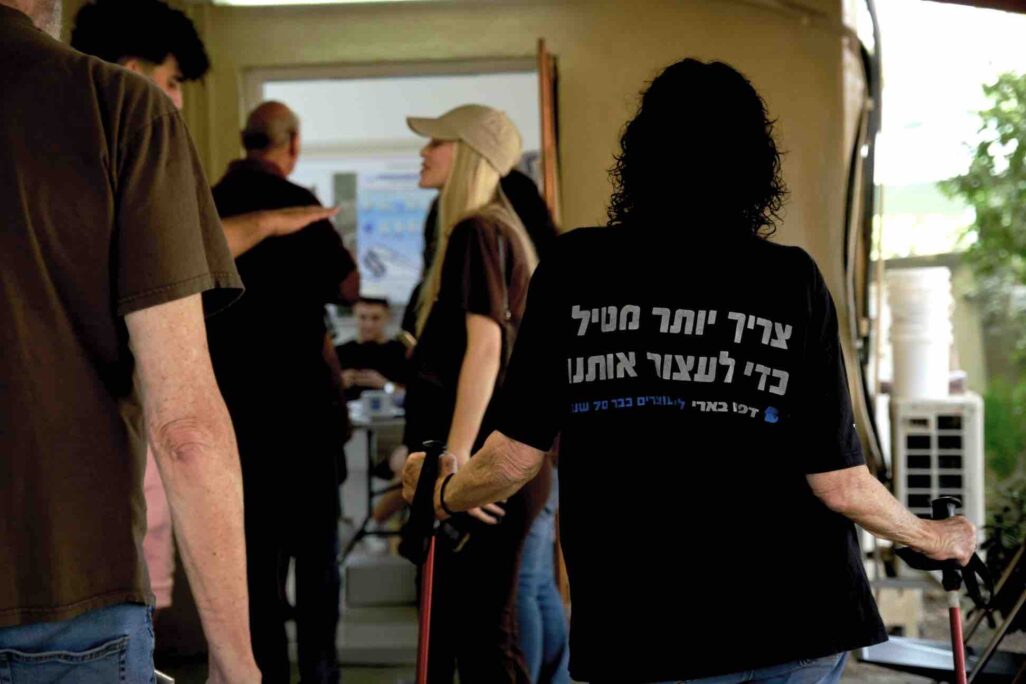
Three years after the 7 October massacre, residents of Sderot, Kibbutz Mefalsim and Kibbutz Be’eri went to the polls to vote in the Knesset elections, with memories of the massacre, the consequences of the war and the security situation continuing to occupy their thoughts and influence their choices.
Some hope for political change and an improvement in their sense of security, while others have remained loyal to their previous choices. In Sderot, residents speak of their fears about the future and the signs of the massacre that are still visible in the city. In Mefalsim, residents want to continue building their lives in the area despite the uncertainty. In Be’eri, political disagreements are testing the kibbutz members’ ability to continue living together, alongside their efforts to cope with the trauma and return home.
Sderot: “I Want Real Security, Not Just Slogans”
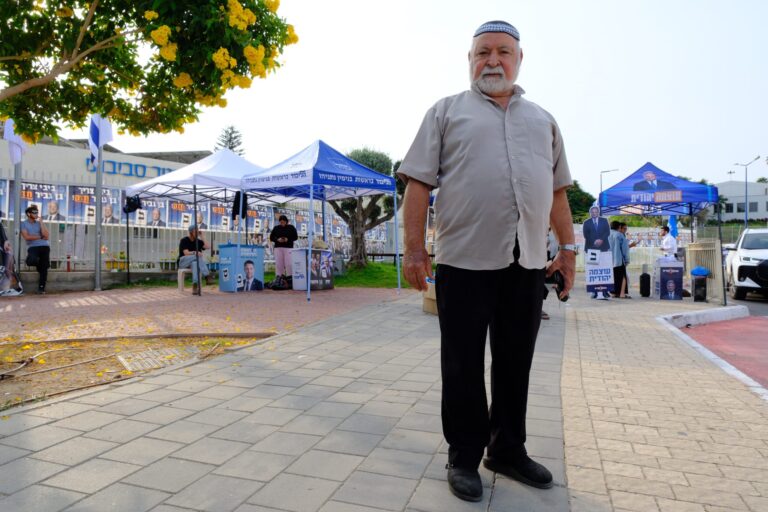
At the polling station at Rabin School in Sderot, Moshe and Esther Peretz voted. They moved to the city four years ago. The couple were in Sderot on October 7th, were evacuated to Jerusalem and returned to their home four and a half months later. They arrived at the polling station early, hoping for change and unity.
“The war influenced my choice,” Moshe says, while Esther remained loyal to her previous choice. “There needs to be security and good governance. The problems need to be dealt with properly, and there needs to be unity between us, so that we don’t make our enemies happy,” Peretz says.
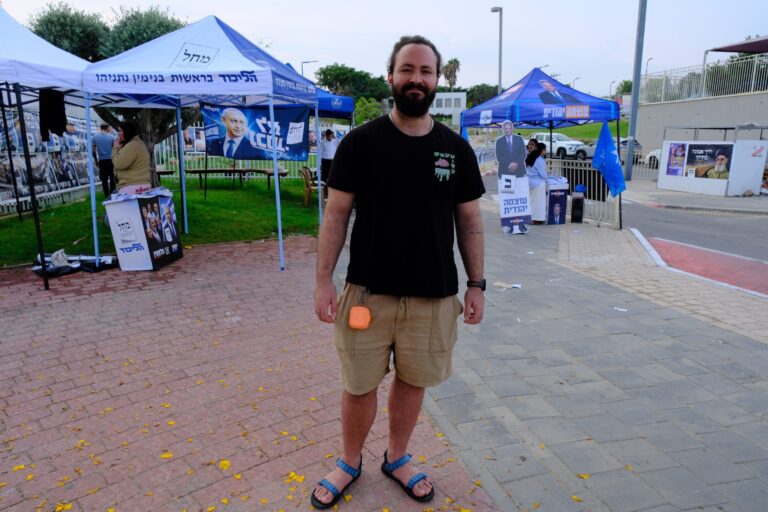
Shai Baskin (26) and Yonatan Alfi (29), who have been living together in Sderot for the past three years, also came to vote. Alfi, who has served in seven rounds of reserve duty, says he wants to look ahead. “It’s problematic to vote out of fear; we vote for what comes next,” he says. “I don’t want our lives to be like this.”
Baskin describes how the events of 7 October continue to be present in every corner of the city and its surroundings. “So much has changed, and nothing has changed,” she says. “You see reminders of it everywhere: bullet holes, memorial corners, stickers. The feeling is still in the air. Seeing the number of Highway 232 on Waze.”
According to her, their sense of security will also influence their decision about whether to continue living in the city. “I want real security, not just slogans. If we feel that things aren’t going to change, it will affect our decision to continue living here.”
Dorit and Tal Azran (53 and 54), who were born in Sderot and returned to the city three months after 7th October, say that their sense of security has yet to return. “Compared with others who were massacred, my situation is good,” Dorit says, “but I still don’t feel safe.”
The couple say they voted for the same political bloc they supported in the previous election, and that security was their main consideration. “Every front needs to be addressed, and there are many,” Azran says, “but we’re at the bottom of the pyramid. Security comes first, and then the other things can be dealt with.”
Mefalsim: “I’m Afraid of Being Naive in the Face of Reality”
“Until this morning, I was optimistic, but I woke up with a sense of apprehension,” says Liron Behar (30), who moved to Kibbutz Mefalsim around two years ago to take part in rebuilding the Gaza border communities through the youth organisation Torenu.
“We’ve tied ourselves to the communities here. I have a shared responsibility, and we want to stay,” she says.
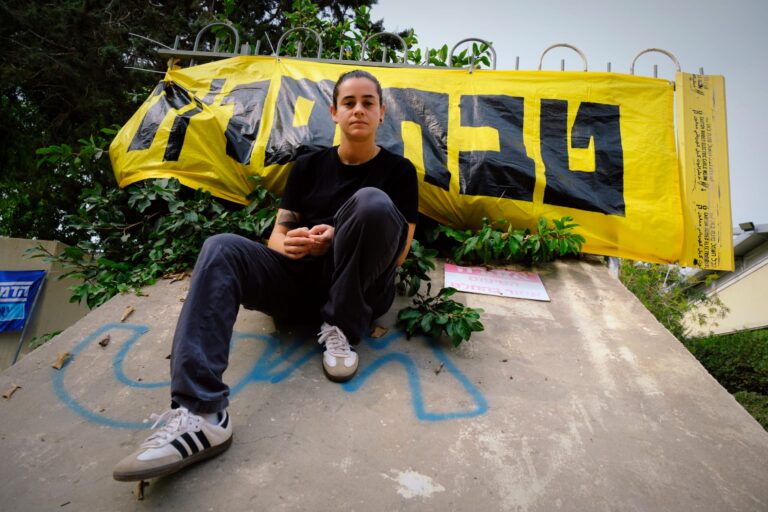
According to her, the effects of the fighting are still being felt in the kibbutz. Recently, many doors were replaced following damage caused by the shockwaves from IDF explosions in the Gaza Strip. “Everyone here is voting on security. It’s awkward to say it, but everyone has shifted a little to the right,” she says.
Behar says that despite her concerns, she still hopes for a different future in the area. “I’m afraid of being naive in the face of reality, but I moved here because I have hope for peace. The big change hasn’t happened yet; money is still being transferred to Hamas, and there are drones.”
She says that in the current election, she chose to vote for Naftali Bennett. “The issues of military conscription and relations with other countries are important to me, and he has the English and the experience,” she explains.
Be’eri: Political Disagreements in the Shadow of Trauma
Three years after the 7 October massacre, Kibbutz Be’eri is still dealing with the consequences of the attack and the process of rehabilitation and returning home. Be’eri was one of the communities hardest hit in the Hamas attack. Hundreds of militants infiltrated the kibbutz, murdered 101 of its residents and abducted 30 people to the Gaza Strip. Many homes were burned and destroyed, and residents were forced to evacuate their homes. The IDF’s investigation into the battle at Be’eri concluded that the military had failed in its mission to protect the kibbutz’s residents.
The queue at the ballot station in the kibbutz secretariat grew longer and longer, and everything appeared routine on the surface. However, around half of the kibbutz members still live in a neighbourhood built for them in Hatzerim, while those who have already returned to Be’eri come to vote at the secretariat.
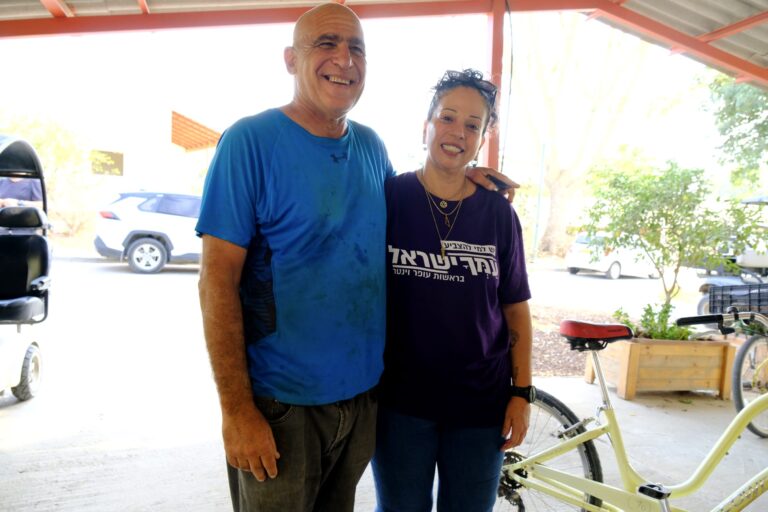
Two members of the kibbutz recently joined parties on the right of the political spectrum. Sigal Kraunik joined Ofer Winter in the Amcha Yisrael party, while Yossi Bachar joined Bezalel Smotrich in the Religious Zionist Party.
In the previous election, Yesh Atid was the strongest party in Be’eri, as it was in most of the kibbutzim near the Gaza border. This time, too, no surprises appear to be expected, although many residents say that political views in the kibbutz have changed and shifted to the right.
“The difference between the right and the left is the pursuit of a diplomatic agreement. The right doesn’t believe that one is possible,” says Gal Cohen, the kibbutz secretary.
The trauma experienced by Be’eri’s members has made political discourse in the kibbutz fraught. In a community where everyone has been affected in one way or another, the ability to continue living together is also being put to the test. “Trauma is a rupture in trust; you have to manage it with all its complexity,” stresses Cohen, who took up his position immediately after the massacre.
According to him, managing the community requires great sensitivity. “Everything you do in a traumatised community has to be done carefully. There’s a need for endless patience and understanding, but people are really on edge and have short fuses. Managing this is complicated.” Cohen adds that returning home is heightening the tension.
“I Brought My Daughter with Me Here Today”
Tal Peled (51), a member of Kibbutz Be’eri, arrived to vote at the kibbutz secretariat wearing a shirt bearing a picture of her daughter, Yarin Marie (Noni) Peled z”l, who served as a medic at the Nahal Oz base and was murdered on 7 October.
“I brought my daughter with me here today. I don’t remember her ever voting, and thanks to the current government, she lost that right,” Peled says.
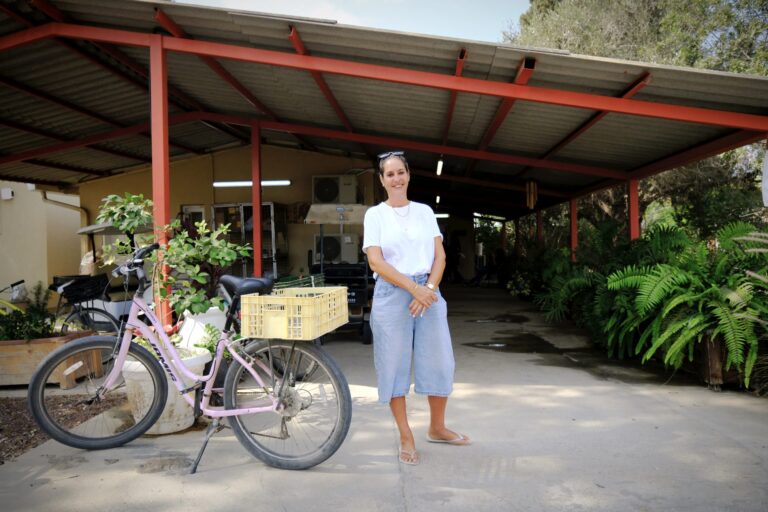
Peled says she voted for change and finds it difficult to accept the decision by some kibbutz members to join right-wing parties. “I find it difficult that people have chosen to join the right. They are continuing the path of those who refuse to take responsibility. I would have expected more common sense after everything we’ve been through.”
Peled recently moved into a new home in the kibbutz, and stresses that she has no intention of leaving, regardless of the election results. “I’m not one of those who declare that they’ll leave the country if the other side wins, but it will be harder to live here. I love the country and Be’eri; we can hope for change. It’s the only thing we have left, hope.”
Sigal Kraunik: “We Can Live Together and Think Differently”
Sigal Kraunik, who lost her husband, Erik z”l, the kibbutz’s security coordinator, in the massacre, is running in the election in tenth place on the Amcha Yisrael party list. According to her, Be’eri is a symbol of shared living, even among people who hold different political views.
“We can live together and think differently, even though people here don’t always give you a hug,” she says. “I’m starting this here, in my home in Be’eri. Yachad [together] is an acronym for yesh chilukei de’ot [there are differences of opinion].”
Kraunik says that pressure was put on her to withdraw from the Knesset race, but she did not give in. She says that if elected to the Knesset, she would like to take part in security-related work. “I want to be part of the migration administration, to emigrate them, to provide a solution for the Gaza Strip,” she says.