
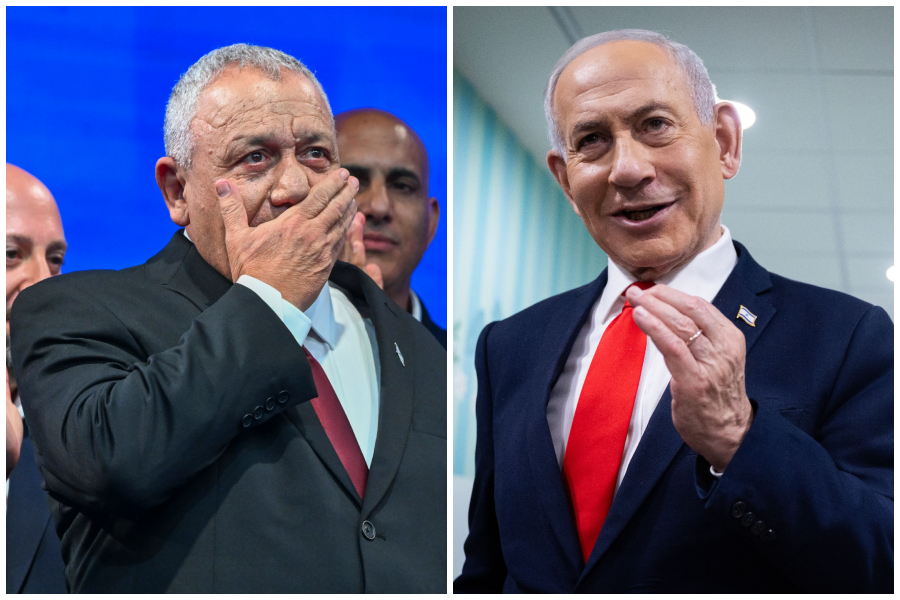
The distribution of seats is becoming clearer, along with the political deadlock facing the parties. Despite Netanyahu’s bloc losing its majority in the Knesset, it is clear that the Change Bloc also lacks a majority. Contrary to the expectations of the Change Bloc parties, they remain a minority without the Arab parties, against which Netanyahu’s bloc has been waging a sustained campaign of delegitimization.
Once the final results are confirmed, which is expected on 4 November, the 28-day period will begin during which either side can attempt to form a government after President Isaac Herzog gives it the mandate to do so. Herzog said on Wednesday (the day after the election) that he was determined to prevent another election. “I expect everyone who comes here to come with an open mind,” he said, referring to the series of consultations expected to take place after the results are announced.
The Netanyahu Conundrum: Will He Seek Defectors or Propose a Unity Government?
According to a report by Moti Castel on Channel 14, the president is considering proposing that Prime Minister Benjamin Netanyahu form a unity government, which he would lead for the first two years before retiring from political life in exchange for a pardon in his trial. The President’s Residence did not comment on the report.
The candidate tasked with forming a government can request an additional 14 days, giving them a total of 42 days. However, given the statements made in recent months, it is doubtful that this political deadlock will be resolved. Netanyahu has yet to speak with the leaders of the parties in his bloc, but is expected to do so soon.
Once Netanyahu receives the mandate, his first option will be to try to recruit defectors from the opposing bloc. The most immediate potential targets are Lieberman, with seven seats, and Bennett, who heads a separate faction within the ‘Together’ list, with at least seven seats of his own. If attempts to entice them fail, or Netanyahu abandons the effort from the outset, he can turn to efforts to form a unity government.
Ronen Tzur: “The Leaders of the Change Bloc Have Almost No Options at All”
“Netanyahu has no reason to rush,” communications consultant Ronen Tzur told Davar. “Once he receives the mandate, he has 42 days, and he can first deal with Iran. He has a government, seats and legitimacy; he doesn’t operate according to the Change Bloc’s timetable. After the Iran issue, if he succeeds in bringing down the regime, he will enter another election from a position of strength.”
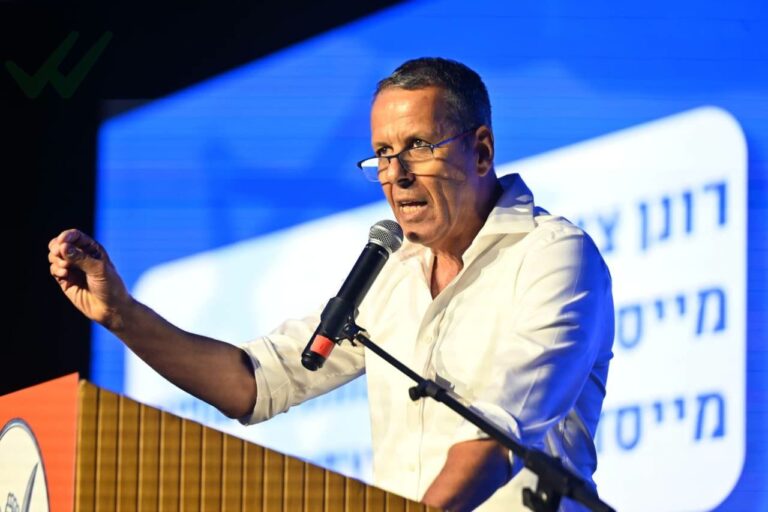
Tzur has experienced several political deadlocks throughout his career, and played a central role in resolving some of them, helping to bring governments into being. In 2020, he was Benny Gantz’s representative in negotiations with Netanyahu’s team, which led to the formation of the national emergency government during the COVID-19 pandemic. A year and a half later, following the government’s collapse, Tzur was one of the architects of the Change Government, representing the Labor Party in coalition negotiations.
Do you see Netanyahu and Eisenkot forming a unity government and sending Itamar Ben-Gvir into opposition, given that Netanyahu has already been distancing himself from him on the international stage?
“That could happen only if Trump puts pressure on him, which is very possible. Trump might invite Gadi Eisenkot, Bennett or Lieberman to a meeting at the White House, with a joint flight aboard Wing of Zion. Will they go or won’t they? If they refuse, they’ll be portrayed as obstructionists who pushed Netanyahu into Ben-Gvir’s arms.”
US President Donald Trump addressed Israel’s political deadlock. In response to a question from Barak Ravid of the news site Axios about the possibility of intervening in government formation to bring about a unity government, he said: “I’ll look into it.”

“So what can they do?”
“The leaders of the Change Bloc don’t have many options. They have almost no options at all. I don’t see them being able to do anything, especially given the extremely hostile personal relationships between them. Personally, I think Lieberman, Lapid and Bennett should hand in their keys and allow new leadership to lead the bloc. Golan winning eight seats is also a total failure,” says Tzur, who announced his candidacy in the most recent Democratic Party primaries but left the party on acrimonious terms, criticising what he described as the party’s shift to the left.
The Arab Parties’ Achievement — and the Boycott Against Them
From the early hours of election day, figures close to Likud began making claims that the Arab parties had rigged the election, and that cooperating with them amounted to “a betrayal of the Zionist project”, as Likud MK Ariel Kallner put it today in an interview with Kan Bet.
For his part, Yair Golan, leader of the Democrats, called this morning for a partnership with the Arab parties. “We have no future here if we don’t stop being afraid and stop being racist. We must no longer accept Netanyahu’s racist division between Jewish and Arab votes,” Golan declared. “Anyone trying to erase the votes of Arab citizens is surrendering to Netanyahu and giving up on Israel.”
He went on to criticize Netanyahu over his partnership with the Haredi parties. “If Netanyahu insists on counting only a Zionist majority, he should first remove the 16 Knesset members from the non-Zionist Haredi parties from his own bloc. They have no right to lecture us about Zionism.”
Golan also stressed: “The Change Bloc has a Zionist majority: 49 to 39. The Change Bloc has an Israeli majority: 65 to 55. We have a majority. We have a responsibility. And we have an opportunity to form a government of change in partnership with Arab citizens of Israel — a government that will serve all Israeli citizens.”
Eisenkot has already made clear that he will not form a government with any party that does not agree to his proposed guiding principles, including the Arab parties, which have not agreed that Hamas should be dismantled or destroyed in the Gaza Strip. However, parliamentary cooperation has not been ruled out, as has been the practice for years between the Arab parties and all Knesset factions.
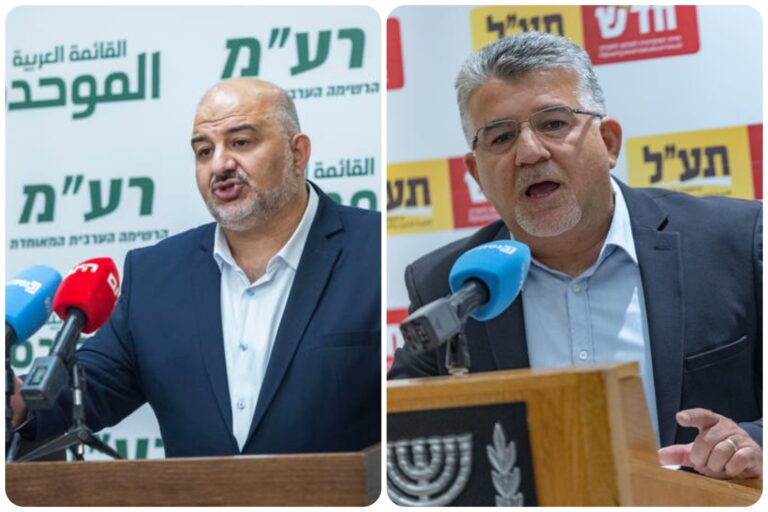
“I think the chances of pursuing some kind of parliamentary initiative that relies on the Arab parties other than Ra’am—that is, the Joint List—are virtually zero at this stage,” Tzur says. “Taking such a step would paint Lieberman and Bennett as collaborators with Tibi and Cassif.
“These guys [Lieberman and Bennett], I think, should leave Israeli politics along with Lapid, after failing to defeat Netanyahu even once in the 14 years since 2012, and repeatedly forcing the bloc to run on separate lists without a leader. But if they are looking towards their future on the right, cooperating with Tibi and Cassif would be a complete break with that world. I don’t see how it could happen.”
“But all these years, Knesset members from all factions have cooperated with the Arab parties. What is different now?”
“Netanyahu can advance initiatives with Mansour Abbas, but the Change Bloc cannot do that. It would require a great deal of courage, and it is not clear that it would be wise. Secondly, replacing the Knesset speaker in order to establish a state commission of inquiry is attracting a great deal of attention right now, because Cassif could come along and set conditions, saying that his support depends on the commission also investigating the massacre of children in Gaza, or something similar. What would Bennett and Lieberman do? I don’t see it happening.”