
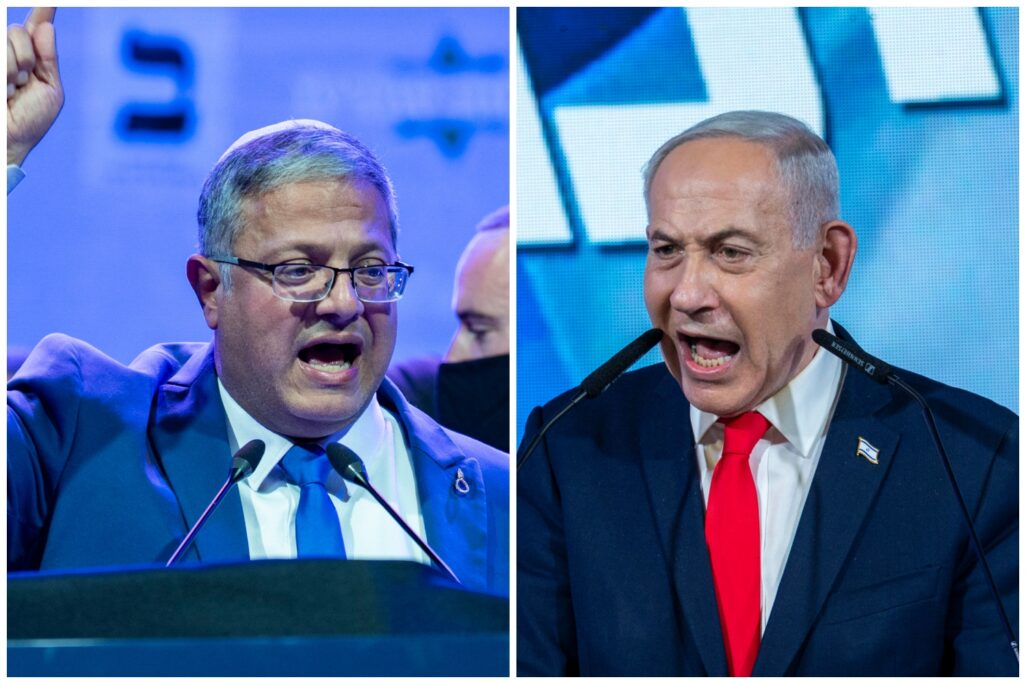
Otzma Yehudit chairman and National Security Minister Itamar Ben-Gvir met with Prime Minister Benjamin Netanyahu for an extended discussion about the options for forming the next government. According to a statement by Otzma Yehudit, the two discussed ways to preserve right-wing rule and prevent the formation of a government led by the Change Bloc. The party said that they “discussed how to preserve the right-wing government and prevent the formation of a left-wing government with the support of terror supporters”.
Meanwhile, Yair Lapid, No. 2 on the Together party list, addressed the election results and efforts to form an alternative government on Friday morning. “I too wanted a clear, immediate victory, the kind you can go to sleep with—but that’s not what we got,” he wrote on X. “This is not a knockout victory, but a points victory, and those count too. Now comes the truly difficult part—trying to form a government. It will be difficult.”
Lapid asked his supporters to be patient, adding: “If you want to know whether something is happening behind the silence you’re hearing now—the answer is yes.”
Meanwhile, the Central Elections Committee has completed the counting of votes in the 26th Knesset election, including the double envelopes. According to the published results, the Netanyahu bloc won 53 seats, the Eisenkot bloc 48, and the Arab parties 19. Likud is the largest party, with 27 seats, followed by Yashar!, led by Gadi Eisenkot, with 21 seats, and Together, led by Naftali Bennett, with 12. The results are still subject to the Central Elections Committee’s verification procedures and are expected to be submitted to the President of Israel on 4 November.
The distribution of seats does not allow either of the two blocs to form a government on its own. Netanyahu is eight seats short of the 61 needed for a majority, while Eisenkot is 13 seats short. However, the parties making up the Eisenkot bloc and the Arab parties together hold 67 seats in the Knesset. The possibility of forming a government with the participation or support of the Arab parties has sparked disagreement within the Change Bloc, some of whose leaders ruled out such cooperation during the election campaign.
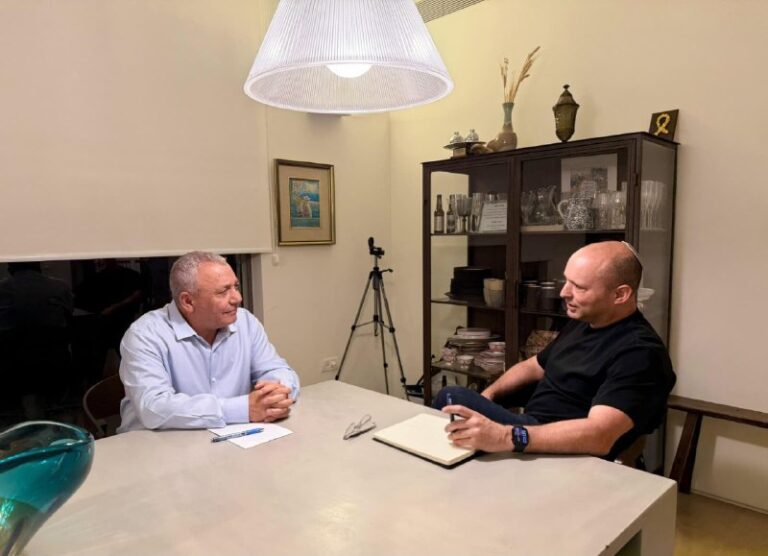
Eisenkot, whose party is the second-largest in the newly elected Knesset, has already begun talks to explore the options for forming a government. In a message to voters following the election, he said: “I commit to working hard to be worthy of your trust. I will work to fulfill the will of the people and form a new and better government for Israel.” Eisenkot did not specify the composition of the government he is seeking. The options being discussed in political circles include a government with the participation or external support of the Arab parties, cooperation with Haredi parties, and the formation of a unity government.
Likud is also preparing for complex negotiations. Netanyahu has already held talks with the leaders of the right-wing parties, including Ben-Gvir and Religious Zionism chairman Bezalel Smotrich. Meanwhile, the Haredi parties are following the negotiations closely, concerned about the possibility of a unity government that would leave them in opposition. United Torah Judaism made clear after the election that it would not enter into political negotiations before the publication of the final results.
The next stage in the government formation process will be a round of consultations between President Isaac Herzog and representatives of the factions, after which he will task one of the Knesset members with forming a government. Until then, negotiations between the parties are expected to continue as they seek to reach agreements that will make it possible to form a government and avoid another election.