
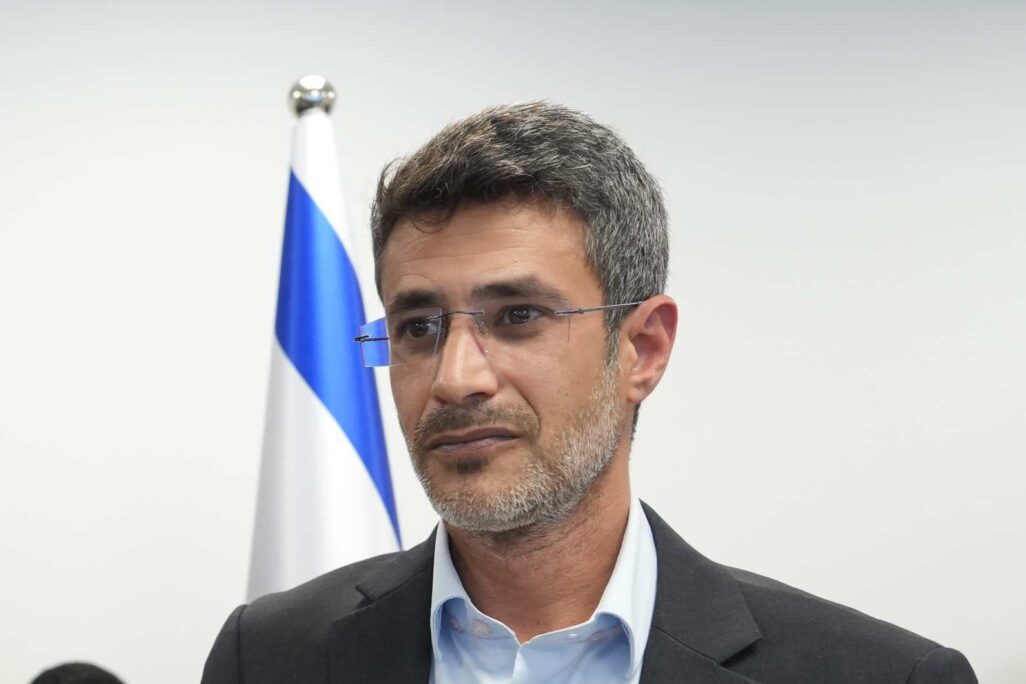
“I received messages like ‘We came to help you, but if this is how you vote, let Bibi help you,’” Avichai Stern, the mayor of Kiryat Shmona, told Davar, referring to messages he received in recent days from citizens who volunteered and donated to the city in recent years. “I see the use of terms like ‘the battered woman’ [a metaphor for staying loyal to a harmful partner], all kinds of epithets, people who wrote that you shouldn’t stop in the city to buy a bottle of water. Who gives you the right to look down on us? What have we come to?”
As in election campaigns over the past decade, in the elections for the 26th Knesset held this year on October 27 Likud won about half (48.5%) of the votes in Kiryat Shmona, and right-wing parties won most of the residents’ votes. The election results in Kiryat Shmona and in Sderot as well—cities hit hard by the Swords of Iron War, whose residents were evacuated for an extended period—drew criticism on social media and in the press. “The vote in Sderot and Kiryat Shmona proves once again how an alliance of populism and ignorance that votes like a herd no matter what tramples the public that in practice carries it on its back,” Sharon Idan, a former journalist at Kan (Israel’s public broadcaster), wrote over the weekend.
“Settling the borders is not a charity project, but a supreme Zionist mission”
“There’s no big surprise here, these are the patterns in every election campaign in Kiryat Shmona, the public in the city is principled and rooted,” Stern responded to the criticism. “Some people think, ‘How can you support someone who didn’t help you?’ I’m not determining whether that’s right or not, and I don’t spare criticism when it’s needed. I also don’t forget who helped us from civil society, but since then very significant government decisions have been made.”
“To call the border cities ‘backward’ and to talk about ‘subsidies’ is a slap in the face. Settling the borders is not a charity project, but a supreme Zionist mission that exacts a heavy price in human lives. The border cities are the flak jacket that protects the center, and their residents are fighting for their home amid a reality of evacuation, severed lives and starting over, without being inferior to anyone by so much as a millimeter. The real ignorance is not that of the heroic Zionists from Israel's periphery, but of self-appointed elitists who have grown accustomed to thinking the world revolves around them. We in Kiryat Shmona will continue to lead, to protect and to serve the country with our heads held high. And there will be those who continue to write embarrassing tweets.”
Stern, who sharply criticized the government and its head over the lack of attention and budgets the city received during the war, and who declared his support for the Likud ahead of the elections, was not alone. Sderot Mayor Alon Davidi, whose city’s residents were also a target of the criticism, was also furious. “The residents of Sderot and Kiryat Shmona can teach you and your ilk a lesson in Zionism, values, heroism and love of the land,” he wrote on social media in response to Idan. “They certainly don’t need your approval for their choice. Enough with the racism, the condescension and the arrogance.” Unlike in Kiryat Shmona, in Sderot there are no known donors who announced they were ending their donations to the city.
Sharon Idan's post on X: “Let me boil down the simple frustration for you: The educated, working, high-tech and progressive public subsidizes backward cities with its money, and at the ballot box, each time it gets a resounding slap in the face from them. The vote in Sderot and Kiryat Shmona proves once again how an alliance of populism and ignorance that votes like a herd no matter what tramples the public that in practice carries it on its back. That’s the story.” Alon Davidi's response: “The residents of Sderot and Kiryat Shmona can teach you and your ilk a lesson in Zionism, values, heroism and love of the land. They certainly don’t need your approval for their choice. Enough with the racism, the condescension and the arrogance!”
“We live in a democracy, and the most important thing is to remember that we are one people”
The two border cities, which absorbed blows and evacuation in the last war, have been recovering in recent times. Stern emphasized the government decisions that gave the city critical support—the establishment of Tel-Hai University of Kiryat Shmona in the Galilee, plans to build new neighborhoods and a rail line to Karmiel, and the urban renewal taking place in Kiryat Shmona.
Stern also noted that the election results in the city were not monolithic: “In Kiryat Shmona people voted across the spectrum, there are some who voted for Ra’am here, and the second-largest party is Eisenkot’s Yashar." In Kiryat Shmona, Yashar won 10.6% of the vote. “I’m not willing to accept these generalizations. We were always the country’s flak jacket, the ones on the borders protecting those in the center so that they can carry on as usual. We live in a democracy, and the most important thing is to remember that we are one people.”