
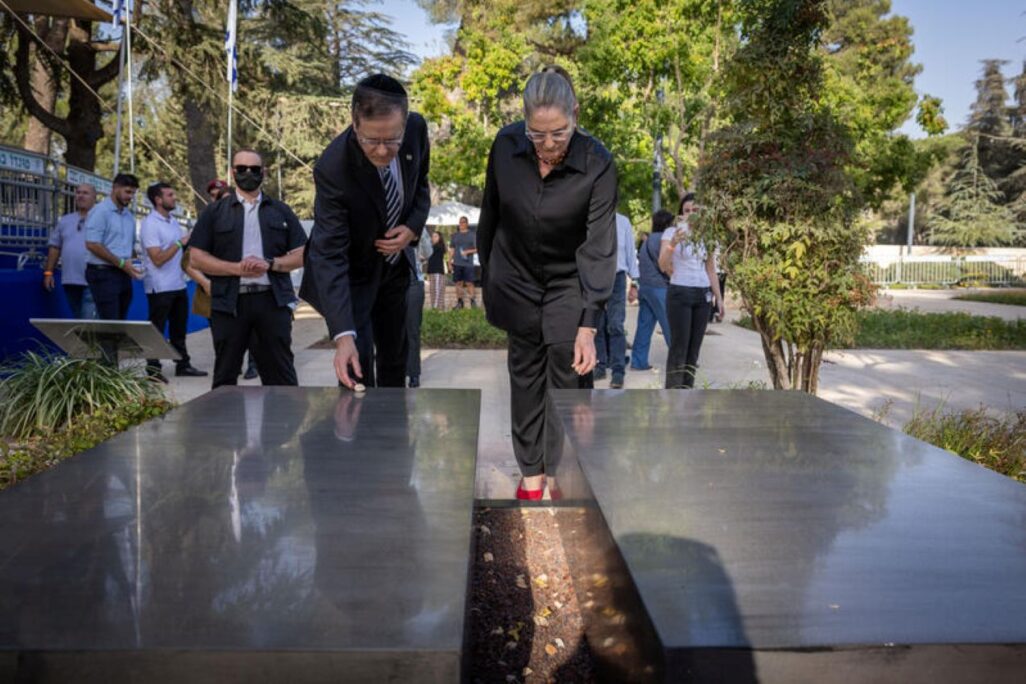
“Today, Yitzhak Rabin Assassination Memorial Day is barely mentioned,” Yair Sheleg (62), a journalist and author, a researcher at the Hartman Institute specialising in religion and state, and a religious Zionist, tells Davar. “I looked this year and hardly saw any mention of the assassination, even in the state media. It’s true that dramatic events are unfolding in the present, but nevertheless, I would have expected more attention. The declining importance of Memorial Day can also be seen in Netanyahu’s audacity in being absent from the ceremony on Mount Herzl as prime minister, for four consecutive years now.”
In an interview marking 31 years since the assassination, Sheleg tells Davar about his feelings and thoughts at the time. “My wife was supposed to fly to the United States the following day, as part of a delegation to Jewish communities. We were preparing for her trip and weren’t watching television at all. On Saturday night, we were speaking on the phone with my mother-in-law when suddenly I heard the sound of gunshots in the background. I asked my mother-in-law if she was watching a Western or something, and she said to me, ‘What, you haven’t heard? Rabin was shot.’ It was a shock. My wife’s trip was postponed by a day. When she arrived in the US, she felt that, as someone from the religious Zionist community, she was being held responsible for the assassination by the people she met.”
")
“I remember that that evening I called Amnon Dankner, with whom I had founded a group called ‘Shacharit’ a year earlier, to promote cooperation between religious and secular Jews and a renewed engagement with Judaism. We said to ourselves that Israeli society would never be the same again. The main thing I anticipated at the time was that relations between the different camps would become much less familiar and informal. There had always been a sense that, despite all the disagreements, everyone met up during reserve duty and everyone was friends and brothers. I had a feeling that this was going to be cut short, and that relations would become much more suspicious, relying more on laws and formal definitions.”
Did that happen?
“Fortunately, on the whole, no. In other words, the sense of familiarity and closeness proved stronger even than the assassination. But of course, there is much more suspicion between the different camps today.”
Was this a result of the assassination?
“On the left, the suspicion is very much connected to the assassination; on the right, disengagement was the major crisis. Following the disengagement, there has been much less commitment to state institutions within religious Zionism and the right, and less willingness to accept cooperation with the other camp – to accept that whatever the government decides is what should happen. We can also see this in the growing number of ‘price tag’ attacks (attacks on Palestinian villages by right-wing settlers). During the judicial overhaul, for example, the right was willing to dismantle the judicial system that protects human and civil rights. The left, at least some of it, was willing to dismantle its unequivocal commitment to reserve military service.
“There is a paradox in Israel: the issues we argue about are matters of life and death, and each camp is convinced that the other’s approach endangers the very existence of the state. That is why there is such severe verbal violence. On the other hand, that same reason, the external threat, reduces the motivation for physical violence between the camps. But during the judicial overhaul, even the external threat was not enough to act as a restraint.”
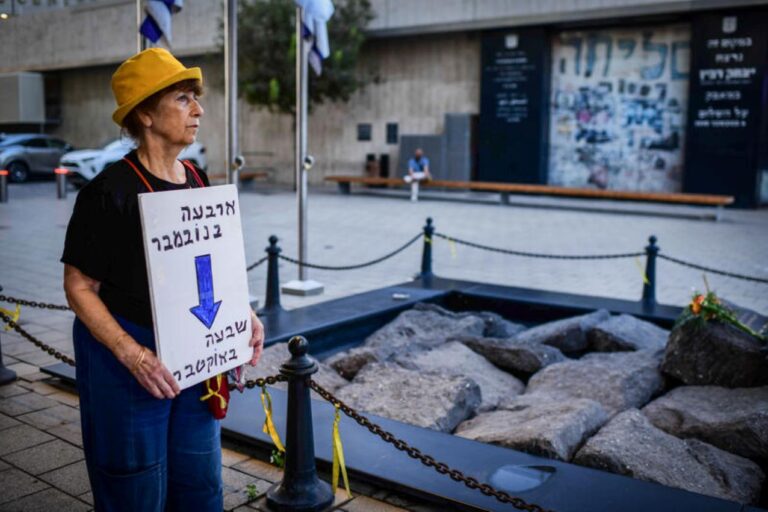
How do you view political incitement and violence today, compared with 31 years ago?
“One of the difficult things that has happened is that political violence is now normalised. In the years leading up to Rabin’s assassination, there was very severe verbal violence, but physical violence between the different camps was less common, until the assassination itself. Today, there are more cases of physical violence.
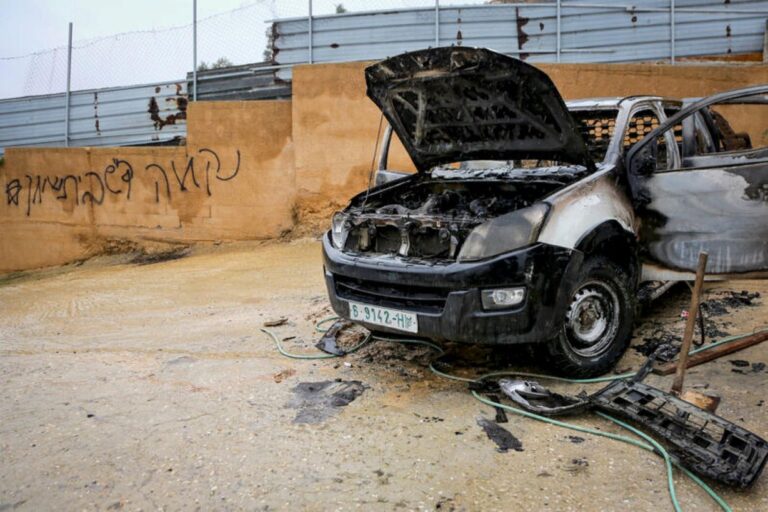
“We must remember that political violence is not only about relations between different camps within Jewish-Israeli society, but also about what you are willing to do to citizens of the enemy. If there are still some restraints within the home, between Jews, all restraints have been broken when it comes to Palestinians. This is true in Gaza, where one could still argue that it is taking place in the context of combat, although of course greater caution could have been exercised. In the West Bank, it is no longer really taking place in the context of combat. You are creating the friction of your own initiative, in order to make their lives unbearable and force them to leave. So I think the willingness to use violence to achieve political goals has increased significantly, both against Jews and, all the more so, against Palestinians.”
Sheleg was married to journalist Bambi Sheleg until her death in 2016. She was one of the most prominent voices in Israeli public discourse advocating dialogue and partnership between different sectors of society, and founded the journal Eretz Acheret in this spirit, partly in the aftermath of Rabin’s assassination. Many people were influenced by her writings, in which she called for the establishment of an “alliance between constructive forces” across different groups in society, rather than allowing the destructive forces within each group to prevail. Recently, an event marking ten years since her death was held at the Hartman Institute in Jerusalem at the initiative of her family, under the title “We Have No Other Country”.
Many initiatives promoting reconciliation, dialogue and the search for common ground emerged following Rabin’s assassination. In light of the situation today, have they failed?
“First of all, the wave of establishing secular or secular-religious study centres began as early as 1989, and was connected to internal processes within secular society – a search for meaning and identity. It is true that this accelerated following the assassination: there was a surge in the number of initiatives, driven by a desire among the secular centre-left public to engage in dialogue with the religious public, and among that religious public there were people who wanted dialogue.”
“Over the years, the sense of commitment to state institutions within religious Zionism was damaged by the disengagement, but it did not disappear. I would say that the last four years have divided religious Zionism over its commitment to state institutions and its aspiration for unity. One bloc, led by Smotrich and his party, pushed hard for the judicial overhaul, but people like Professor Yedidia Stern, or Raz Nizri, who served as Deputy Attorney General, were seeking compromise between the camps.”
What about the centre-left?
“I think the secular left still feels a great deal of fear or hostility towards the right, particularly the religious right. Unfortunately, within the secular left, too, there is a desire to defeat the religious opponent rather than reach an agreement with them, much like on the fanatical right. But there are more voices in the secular centre calling, for example, for a unity government now.”
What does it mean today to build a society with a strong centre, one that knows how to set boundaries for the fringes as well? Many people are also questioning the Likud, which has normalised cooperation with figures like Ben-Gvir. Likud MK and Deputy Knesset Speaker Nissim Vaturi said that Kahane would receive the Israel Prize today – you would not have heard such things from Likud members 30 years ago.
“Historically, the Likud is a movement that follows its leader, for better or worse. A great deal depends on Bibi in this regard: if Bibi decides that they are going with the centre and pushing the fringes back to where they belong, then that is what will happen. And when Bibi decided to go with the fringes, the Likud followed him. Over the past decade, the Likud has also become largely very opportunistic, and from that perspective too, if Bibi or whoever comes after him decides to move towards the centre, that is what will happen.”
Returning to Yitzhak Rabin Assassination Memorial Day, what could restore its meaning and significance?
“I think it should be changed from a day commemorating Rabin to Democracy Day. There is a limit to how much a society can remember one person. I think the emphasis on this day should be on education about democracy and encounters between people from different sectors of society. Perhaps it could become Israeli Citizenship Day, for example, with all 16-year-olds receiving their identity cards at school on that day.”
Is there any other meaning of the word democracy that most of Israeli society is willing to agree on? Regarding the judicial overhaul, both its supporters and its opponents spoke in the name of democracy.
“It is interesting that there is almost no group in Israeli society that comes out against democracy. That is a success for democratic values: Arabs, for example, also speak in the name of democracy, as do the Haredim, who may not genuinely believe in it. The slogan of United Torah Judaism in the last election was ‘The right to be Haredi’, which is a quintessentially democratic statement. I believe that, when we examine this seriously, even people on the right will not think that democracy has no meaning when it comes to human rights. They, too, do not want to give up their own human rights.”