


About half a year ago, I flew to Thailand for a long trip. It was mainly a period of disconnecting from Israel, that I had taken for myself in my mid-thirties, and most of the time I stayed on one of the tourist islands. Still, I knew that at the end of my stay I would dedicate at least a week to traveling to Isaan, the region from which Thai workers in Israel come.
I had been there 12 years earlier, when I stayed with one of the workers who has since returned to his country. This time I wanted to travel alone, to try to understand for myself where they come from. I felt I owed them that.
Eitan, my father, worked from a young age in agriculture and wanted to become a farmer when he grew up. He grew up among the orchards of the moshava Moshav Migdal, before it became Hod HaSharon, and from a very young age he dreamed of having his own farm. He gradually progressed, and in 1996 he and my mother, Roni, purchased the farm in Adanim.
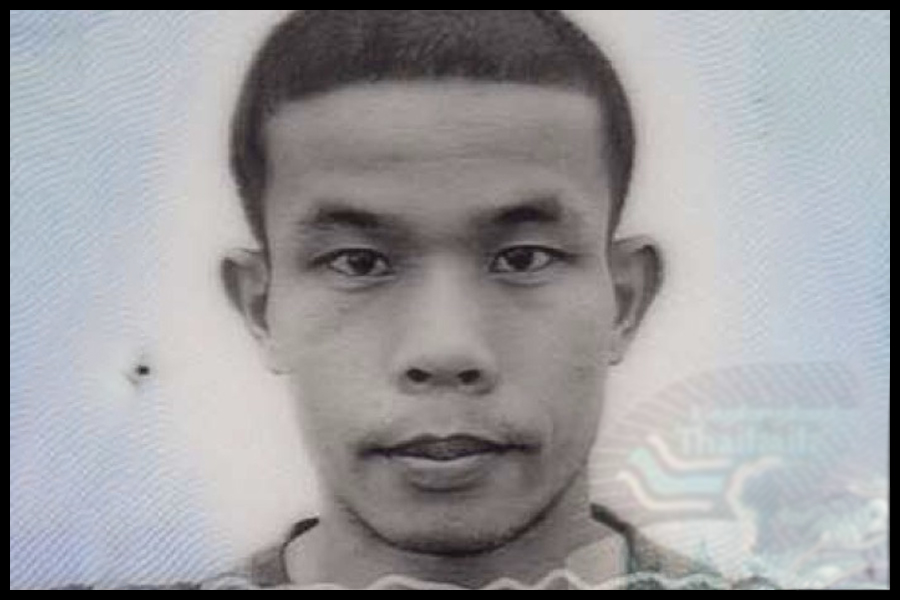
Over the years, they built a packing house on the farm, cooling facilities, a yard for agricultural equipment, and also a shed for tractors. It was in that shed that the great tragedy occurred when an Iranian cluster bomb fell and killed Wat, the nickname of Lalin Chaiwat, a worker who had arrived from Thailand eight months before his death.
Wat worked in the sweet potato packing house on the farm. He proved to be a responsible, pleasant, and hardworking person. He was loved by his colleagues and the management team, and was about to attend a tractor licensing course to expand his role. He was newly married to his beloved and was the main provider for his extended family. His life was cut short in an instant.
Thai agricultural heritage of advanced farming
Thai workers began arriving in Israel in the 1990s, and at first there were difficulties in integration. There is a story about a farmer from a neighbouring moshav who was among the first to employ Thai workers, and complained that “they don’t understand any language—not even Arabic.” But despite the language and cultural gaps, over the years Thai workers have become a central pillar of Israeli agriculture: not only manual labourers, but also tractor operators, mechanics, and irrigation and maintenance workers.
Communication often works through a minimalist hybrid language, mixing Hebrew, English, and Thai words. “What’s up, when you finish work? Let’s discuss the field, come to the cabin together, okay? You understand me? Good, thanks.”
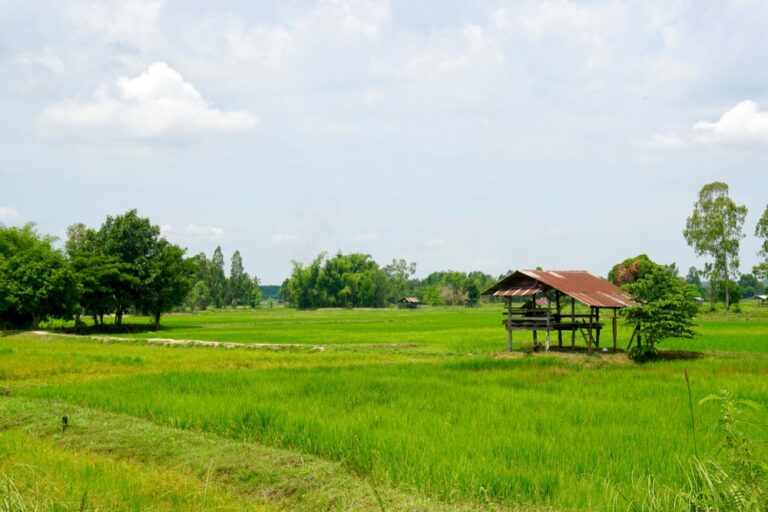
It was commonly thought that Thai workers excel in agriculture because they are polite, rural, and disciplined, and because they learn the work once they arrive in Israel. In Isaan, I understood that they actually excel because they come from a region with highly advanced agriculture, which exports food across all of Asia.
The area looks a bit like how Israeli moshavim once did: everyone is a farmer, and every vehicle is a pickup truck. In Thai media reports about Wat’s death, he was not defined as an agricultural labourer but as a farmer. In fact, many of the workers in Israel are farmers in their home country in Thailand.
My father, whose mother was a farm laborer, knew that unlike him, we “were born bosses,” and he tried to instill in us respect for workers. He would say that you should pay a worker before their sweat has even dried, and he taught us that you need to understand every job through your own hands.
In agriculture the days are long, and the work is sometimes Sisyphean, especially in the sweet potato sector. It is precisely in those moments that humanity comes out. I have often worked in the fields with Jews and Thais, with Palestinians from the West Bank, from the north, and with Bedouins. I saw that, in a deep sense, we are all the same. And when working in agriculture while there is war outside, everyone understands the tragedy.
My father checked his pulse, and understood
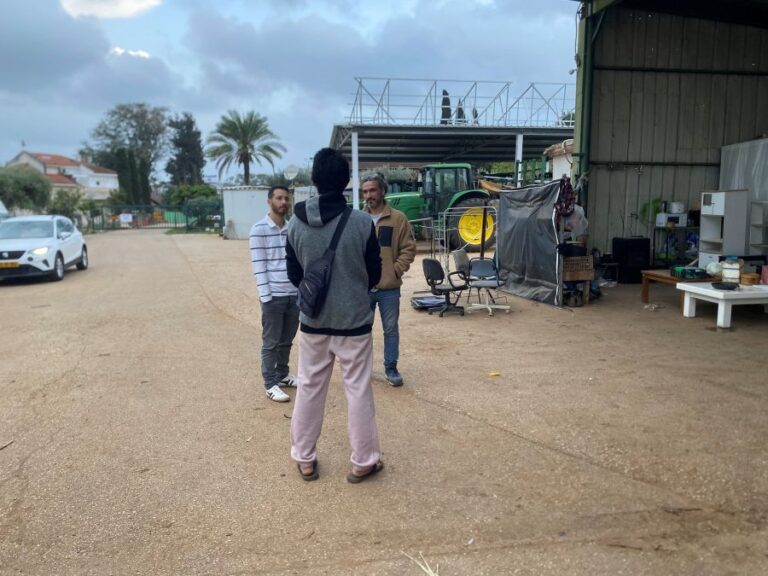
On the night I received the news, I was in Kfar Saba, and as I drove to the farm I expected to see flames coming from the compound. But as I got closer, everything was quiet and calm, the electric back gate of the yard was working. In the tractor shed there was a bustle of the Home Front Command, police, and media. There is a dog in the yard that had just given birth to several puppies, and they were inside a protected shelter.
I entered the shed and looked around. I saw the body, partially covered, next to part of the shed roof that had been blown apart, several tractors pierced and with punctured tires, and chaos everywhere—shrapnel holes all over. In the days that followed, we understood how much damage those fragments had caused; they had penetrated thick metal pieces and travelled a long distance. Poor Wat had been standing just a few meters from the impact.
My father was the one who found him. When he heard the impact, he evacuated all the workers like a sergeant, instructing them to make sure everyone was accounted for. They thought everyone was there, but my father went through the rubble, found Wat, checked his pulse, and understood.
After I realized what had happened, an enormous number of rescue and security personnel arrived at the scene, journalists, municipal council members, curious passersby. There were many questions to answer and many procedures to go through, things that needed attention, some necessary and most of them invented. Part of the circus of our lives. Every moment another police or army team arrived, asking for the thousandth time whether all the workers had been counted.
We took the remaining Thai workers to the moshav community center. We ordered them pizzas and spoke with them. We allowed them to sleep there together for several days.
At night, so many people from the moshav came and stayed with us, and it felt completely natural—like a class reunion. Everyone helped in whatever way they could, and there was a lot of that. In those days the whole family mobilised: my sisters and even my eldest nephew stayed with my parents throughout the night, and in the days that followed, family and friends came to the farm. We felt surrounded and supported, and I am grateful to everyone who was there for us.
Men who are not used to sitting down for a conversation
That same night I sent a message to my dear friend Daniel Porat, a Thai-speaking psychologist who is deeply familiar with Thai culture and religion. His life path led him to become the person called in such situations, and sadly he has already accompanied several disasters involving Thai workers in the Gaza border region, both before and after October 7.
He arrived the next afternoon, and we all sat together for a facilitated conversation: the family, Israeli workers, and Thai workers.
It is a group composed mainly of men, with a few tough women, who do not often stop and sit down for a conversation. Porat held the space in an impressive way. Not many words were needed; it was enough to say the obvious things: that we are all shocked and sad, that we want to hear about problems and needs and address them.
Just sitting together for an hour, in presence.
Helping the soul return home
The Thai ambassador arrived at the farm the following day and spent time speaking with the workers. The embassy handled the transfer of the body back to his family in Thailand and stayed in contact with us to address the issues that arose. We arranged for them to organise a Buddhist ceremony with a monk.
My sister and I asked ChatGPT what would be considered respectful in Thai culture, and based on that advice we set up a memorial table at the entrance to the farm.
Thais believe that when a person dies in an unnatural way, the soul remains in the place where it happened and needs help to return home. The monk is meant to perform rituals that assist this process. In the meantime, before he arrived, they left plates of food and incense at the place where Wat died.
They did not want to sleep in the accommodation close to the site of the incident, so we dismantled it and moved it away.
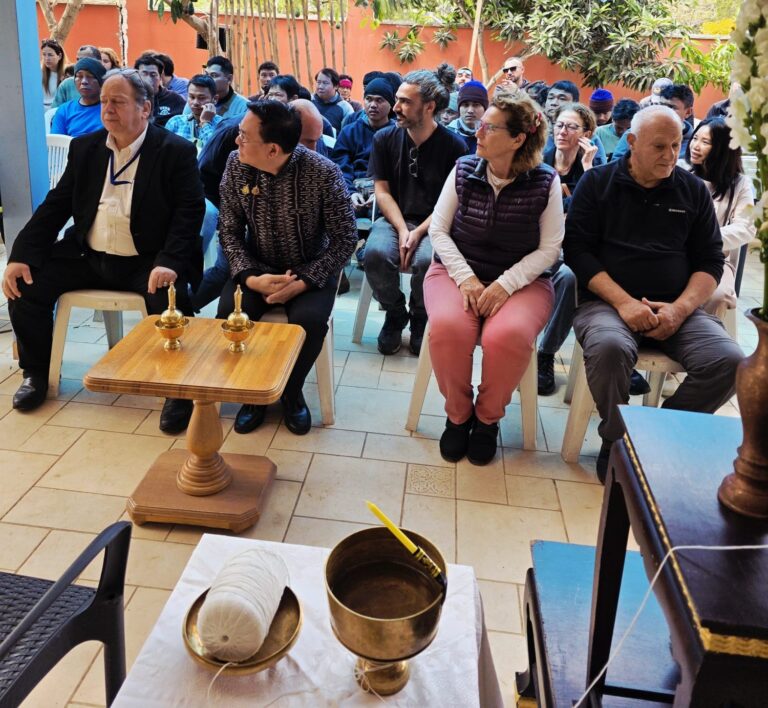
The ceremony took place three days later. We sat on chairs in rows facing the monk, with a small Buddhist altar set up specifically for the occasion. In the front row sat the Thai ambassador, a representative of the Israeli government, and my parents—reflecting Thai cultural norms of respect for hierarchy and for the employer.
In the second row, I sat together with several distinguished guests invited by the embassy, and behind us sat the Thai workers.
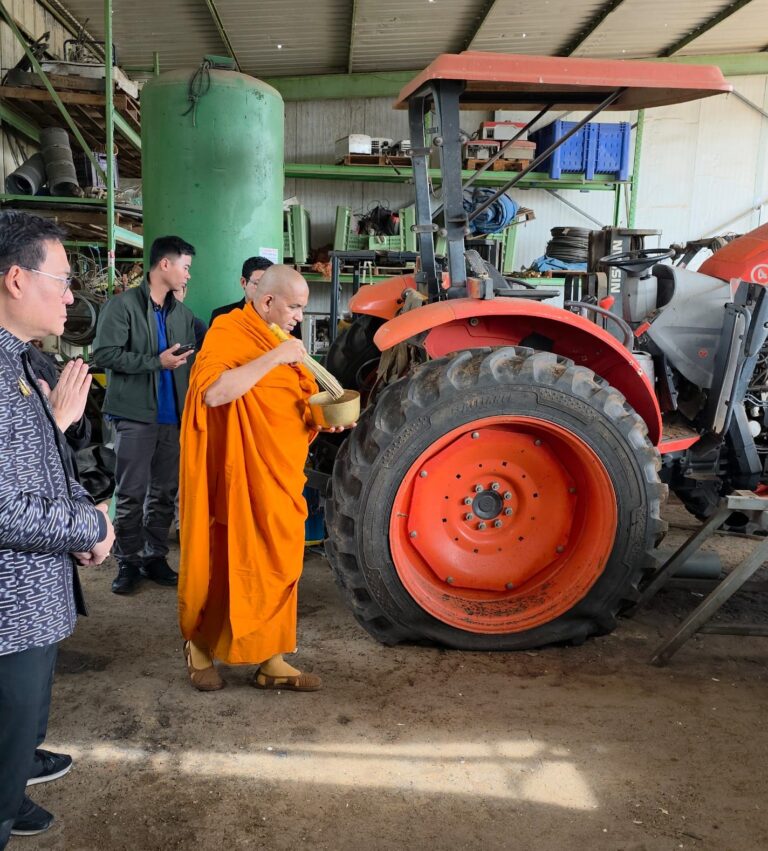
The monk was from Sri Lanka, and the ceremony was conducted in Pali—the sacred language of Buddhism for the Theravada tradition, which is dominant both in Sri Lanka and Thailand. I was surprised by how familiar the Thai participants were with the prayers and mantras.
The monk explained in English that, as Buddhists, they believe in karma, and that we come into the world to understand something, returning through many reincarnations until we do. In this lifetime, our friend Wat had a short life that was cut off abruptly, and we wished him a future rebirth in which he would have a long and happy life.
After the ceremony, we all followed the monk to the site of the impact, where he performed a purification ritual. It included what looked to me like a prayer, the lighting of incense, and then the sprinkling of holy water across the entire affected area, including on all the Thai workers. I am describing what I saw, and I hope I am doing so respectfully.
Of course, this is a tradition and ritual that feels foreign to Israelis. We are not familiar with beliefs in spirits and reincarnation. But we are hosting people whose religion, mourning practices, and worldview this is.
Telling his wife that we are with her
The initial message to Wat’s family was delivered by one of the workers who lived as his neighbor in Thailand. Afterwards, the embassy contacted them as well. The day after the incident, it was important for me to also make direct contact with his wife, and to tell her that we are with her and with Wat’s family.
You cannot stop the pain, but you can try not to add to it. The State of Israel and the Jewish Agency compensate families of foreign nationals as victims of terror, and that is appropriate and respectful. Until that happens, we are helping in the meantime with funeral expenses, mourning arrangements, and bureaucracy.
The family shared with me photos from the mourning period and the rituals. It is impossible not to feel a sense of failure when someone who came from another part of the world to work for you returns in a coffin. But it seems they appreciated the way they were treated, and that Wat had told them positive things about his time here.
Soon it will be harvest time
And there is the business. In agriculture you always have to continue—the fields need tending, customers want produce. The next day we did not work. Two days later we restarted only the packing house, with a team of another farmer who helped us, and after the weekend we went back to work.
This business is the livelihood of all of us, workers and owners alike, and we all have to get up from grief and shock and choose to keep it running. There is a lot of damage, but it is being repaired. We trust that the state’s property tax compensation system will eventually cover the costs, and so we simply work.
The sweet potato planting season has begun; soon will come the wheat harvest and the potato lifting; soon we will complete the repair of the shed and the living quarters, and we will no longer be living in the aftermath of a terror site. The memorial corner will remain. And we will continue trying to understand what we came into this world to understand.
***
Eshel Ozar is a farmer from the moshav Adanim.