
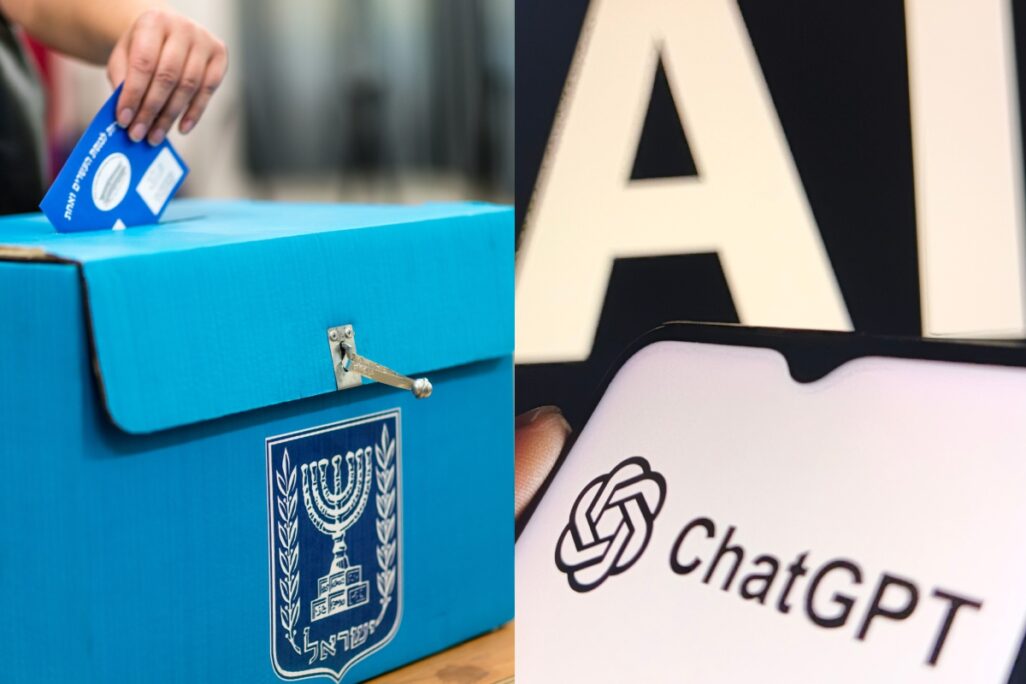
While the Knesset advances legislation requiring the labeling of propaganda videos created using artificial intelligence, Roi Soussan, director of Public Affairs at FakeReporter, warns in an interview with Davar about the broad dangers facing Israel’s first election campaign in the AI era: not only isolated forgeries and deepfakes, but a constant flood of content that weakens the ability to distinguish between truth and falsehood.
According to Soussan, the solution cannot be solely technological. In addition to the legislation currently being advanced to ensure clear labeling of content ahead of the elections, there must be active monitoring, greater responsibility placed on social media platforms for the environment they enable, and the promotion of public education focused on critical thinking.
Elections in the AI Era
FakeReporter is an Israeli organization founded in 2020 to combat malicious activity online, including the spread of disinformation and conspiracy theories, foreign influence operations, hate speech, and violent mobilization. The organization was founded by social activists, experts, and online researchers, and relies on citizens who report malicious content in order to help create a safer digital environment.
What are you concerned about ahead of the elections?
“Our concerns are based on our past experience, on what we are currently seeing on the ground, and on international experience as well. The main danger is not disruptions on election day itself; rather, the central concern is a deep disruption of public opinion. What is happening now is already preventing citizens from making rational political decisions.
“Israel is entering its first election campaign since the launch of ChatGPT (the artificial intelligence model developed by OpenAI) in November 2022. This is a completely new era, and within it we are exposed to two dangers related to artificial intelligence in elections.”
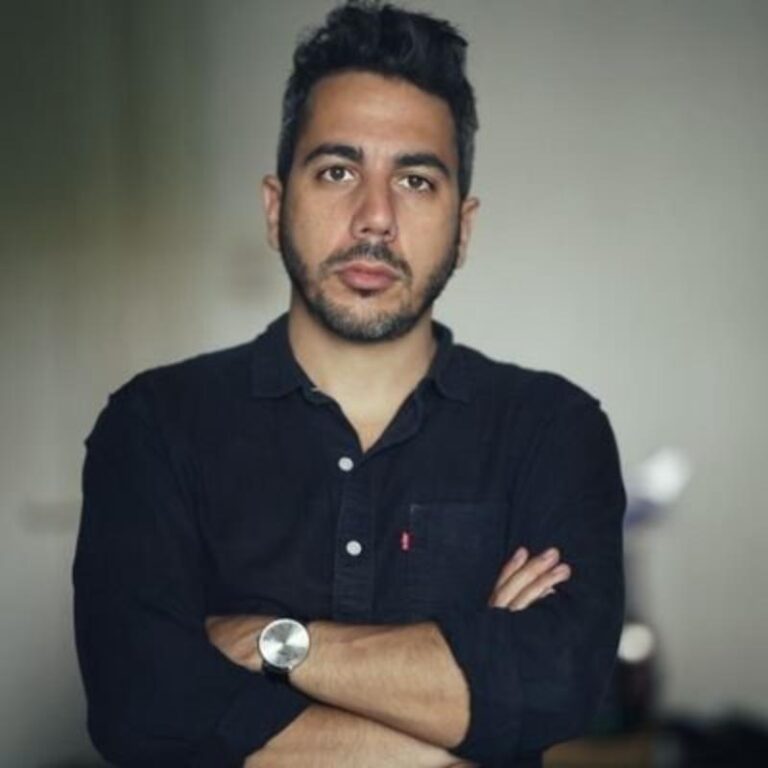
Targeted Fake Content Is Only the Tip of the Iceberg
“The first danger is the one that is more familiar and widely discussed, and for which a legislative process is currently underway: targeted fake content, deepfakes, or AI-generated products that portray a candidate or an event in a distorted or misleading way,” Soussan explains.
“An example of this occurred last January: following a meeting of the heads of the Arab parties, who called for unity ahead of the elections, the Likud published an image showing those four Arab party leaders together with Bennett and Lapid, raising their hands as if they were politically united. We published that it was fake. This is an example of targeted fake content.”
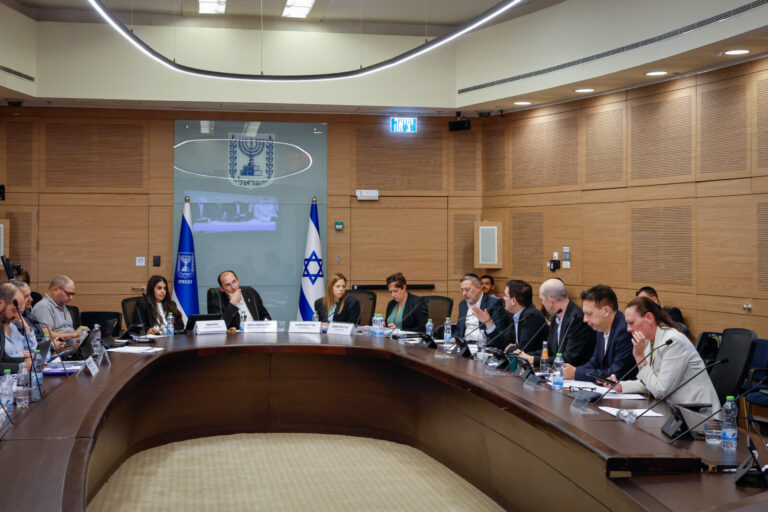
“Another example was presented during a discussion with the chairman of the Central Elections Committee, Justice Noam Sohlberg: a fake video was shown in which Sohlberg was supposedly seen announcing a security incident followed by the closure of polling stations. It was shown to him to demonstrate how dangerous this could be. This is another example of the concerns ahead of the elections.
“So the Knesset’s Central Elections Committee is trying to ensure that such images or videos are labeled, but this is only the tip of the iceberg. When I refer to the tip of the iceberg, I mean targeted fake content about a specific candidate, a lie disguised as truth. But the deeper threat is not one fake piece of content here and there; it is the ongoing flood. The iceberg itself is far more influential and far more destructive.”
Constant Noise has a Cumulative Effect
“The second type is, for example, the ‘mask campaign,’ in which artificial images of Yair Lapid and Naftali Bennett supposedly remove a mask and turn into Mansour Abbas and Ahmad Tibi,” Soussan explains. “It looks somewhat ridiculous to us, but in the end, an image is created. It may be a legitimate political position and it may not be; that is not the point. The point is that ultimately, the image becomes embedded.”
But political propaganda has always relied on spreading images and lies. What is different now?
“True. The innovation here is the endless noise. I can encounter it on my phone, in my hand, 24 hours a day, seven days a week. I can encounter it on social media, on television, constantly and through all kinds of tools. It is not like in the past, when you saw an advertisement in a newspaper marked as an advertisement, or billboards that you knew were advertisements. This reaches you all the time, and it has a cumulative effect.
“Israel is particularly vulnerable to this because of a combination of two factors. On one hand, Israelis are very heavy consumers of social media. A survey by the Israel Internet Association shows particularly high levels of use of WhatsApp, Telegram, YouTube, and other platforms. On the other hand, despite being the ‘Startup Nation,’ Israel’s digital literacy among the public is low compared with other countries. In other words, our ability to identify and recognize manipulation is lower.”
The Netanya Local Elections as a Preview
“To explain the impact of online campaigns and the power of AI-generated fabrications, Soussan points to the Netanya municipal elections held last January. “Israeli local elections can serve as a preview. For example, following the death of Netanya Mayor Miriam Feirberg, new elections were held.
“In the Facebook group ‘Netanya, My City’, which had around 40,000 members, content targeting Tali Molnar, the former deputy mayor and one of the candidates in the election, was circulated. The group was managed by four fictitious avatars that flooded the platform with AI-generated images and content against Molnar.”
“The group itself was not originally intended for political purposes. There was a process of takeover and flooding. For example, one post was designed to portray Molnar as being supported by the ‘Brothers in Arms’ organization, in order to depict her as a radical figure in the eyes of certain audiences. This was done using artificial intelligence.
“Today, the entry threshold into this world is extremely low: it requires almost no money, it is accessible, it can be done very quickly, and it does not require extensive technological knowledge. You do not need to convince people with arguments, you simply overwhelm their perception with an endless stream of images.”
Forgery Campaigns Are Influencing Elections Around the World
According to Soussan, large-scale use of AI-based fabrications can be identified in general elections held around the world. As an example, he points to the 2023 Slovak parliamentary elections, when, shortly before polling began, a fake audio recording of a pro-Western candidate was circulated, in which he appeared to be speaking with a journalist and saying that he intended to steal the election.
“This was a deepfake that used voice technology,” he explains. “It is an example of something that the election authorities did not address at all. It was distributed on Telegram, and from there reached Facebook, gaining hundreds of thousands of views. In Slovakia, a country of five million people, that is a very high level of exposure. That candidate ultimately lost. Independent investigations found that the source of the recording was a Telegram channel affiliated with the Kremlin.”
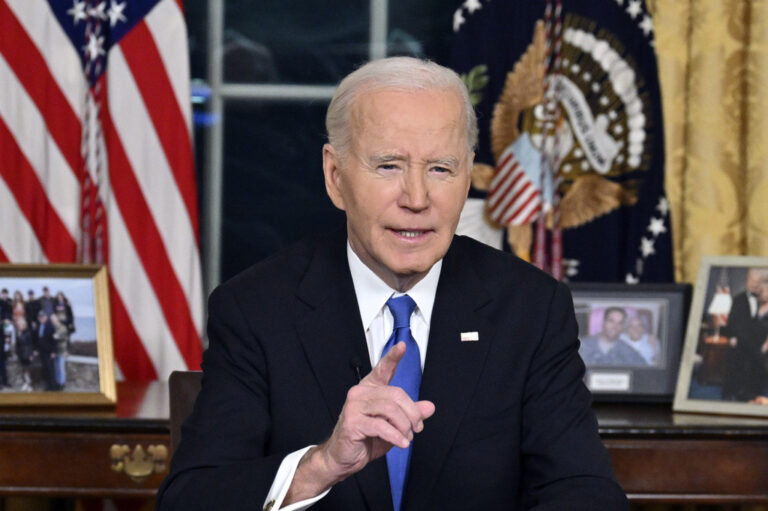
As another example, Soussan cites a fake voice message attributed to Joe Biden in 2024, in which Democratic voters were falsely encouraged not to go out and vote in the primaries “in order to save their energy for the presidential election.”
“The danger is not only mass distribution,” he emphasizes. “It does not have to reach the entire country. It can reach very specific audiences. When we talk about artificial intelligence, we mostly talk about visual products. We do not talk enough about the ability to carry out micro-targeting (directing specific messages and content toward specific audiences), to reach certain people and specific groups, test messages on them, and see whether they are effective.
“There are also broader examples of foreign influence operations. In Romania, elections were canceled due to a foreign influence campaign that used artificial intelligence. In Moldova, a comprehensive pro-Russian campaign aimed at influencing elections online was uncovered. This is a global phenomenon, and Israel is now at the forefront of it because we are entering an extremely sensitive election period.”
“No One Writes That They Are Running a Digital Smear Campaign”
Soussan explains that the creation and operation of digital campaigns are already tools used by advertising companies, communications consultants, digital campaign strategists, and others.
“No one openly writes that they are running a digital smear campaign. Because the technology is accessible and inexpensive, there is not always a professional expert behind it. One of the figures behind the election campaign in Netanya was a paid adviser to MK Idit Silman, and there are also former advisers to left-wing figures who offer these kinds of services.
“One of the main problems is that Israeli election law and regulation primarily deal with parties and politicians, not with external actors. If it turns out that someone else is carrying this out, an external actor who is not the political party itself, the Central Elections Committee has no authority over those individuals.”
What can the state do to address this phenomenon?
“The first step is transparency. Labeling AI-generated campaign content is the first stage in dealing with this phenomenon, and we should welcome the fact that this is the direction being promoted by the Central Elections Committee. I admit that, unfortunately, I am skeptical about advancing the law under the current circumstances, but even if the legislation passes, much more will be required to address the phenomenon.
“We need to establish an effective and proactive monitoring system involving all relevant bodies: the Cyber Directorate, the police, and even the Shin Bet. After all, this also involves attempts at foreign influence operations and a threat to national security. The State Comptroller has already warned that foreign influence campaigns will take place in the upcoming elections.
“Such a system cannot wait only for petitions submitted to the Central Elections Committee. It needs to be able to proactively identify activity, reach the places where discourse is generated, identify keywords, parties, and candidates, recognize when a particular conversation begins, track it, and understand how it develops. All of this must be done without restricting freedom of expression, but rather to promote transparency and, if there is malicious activity, to prevent it in time.”
“A National Public Awareness Campaign Is Needed to Identify Fake News”
“We need to understand that there is no technological solution to this issue,” Soussan emphasizes. “This is an important starting point: technology will continue to develop faster than regulation and political norms. Therefore, we also need to address the elephant in the room, the social media platforms. Ultimately, this is the arena where content is distributed, and the platforms directly benefit from the flow of falsehoods within them. As long as it remains profitable for them, the phenomenon will continue.
“A third approach is to develop the public’s common sense and critical awareness. At FakeReporter, we publish guides that teach people how to consume online content critically: how to identify content created using artificial intelligence, how to recognize a user who is spreading fake content for a particular interest, and how to distinguish between domestic propaganda and activity by foreign actors. This needs to become a national public awareness campaign.
“Just as there is a campaign before elections explaining how to get to the polling station and what needs to be done, there should be a similar effort to help the public identify what is fake and what is not.
“The importance of this issue cannot be overstated. Ultimately, the ability to distinguish between truth and falsehood is the foundation of society. Without it, we cannot conduct dialogue and we cannot manage a shared society. Even with only three months remaining, it is not too late to try to protect the public.”