


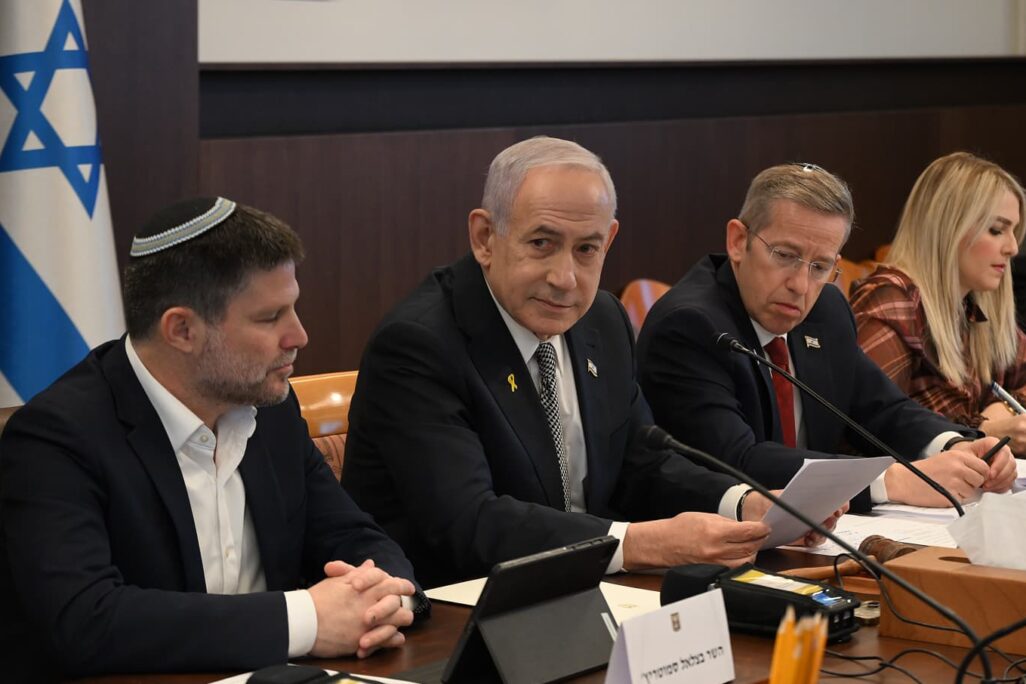
After extended discussions and numerous professional meetings held in recent weeks between representatives of the defense establishment and the Finance Ministry, the two ministries reached a budget agreement this morning (Friday) on the level of defense spending for 2026, which will stand at 112 billion shekels. This represents an increase of 47 billion shekels compared to the 2023 defense budget prior to the war.
The approved framework makes it possible to avoid imposing tax increases on Israeli citizens in the coming year, and even to introduce tax relief as part of the state budget. Finance Minister Bezalel Smotrich said “I congratulate the defense establishment on the agreements. We are allocating an enormous budget to strengthening the army this year, but one that also enables us to bring Israel back onto a path of growth and to ease the burden on citizens.”
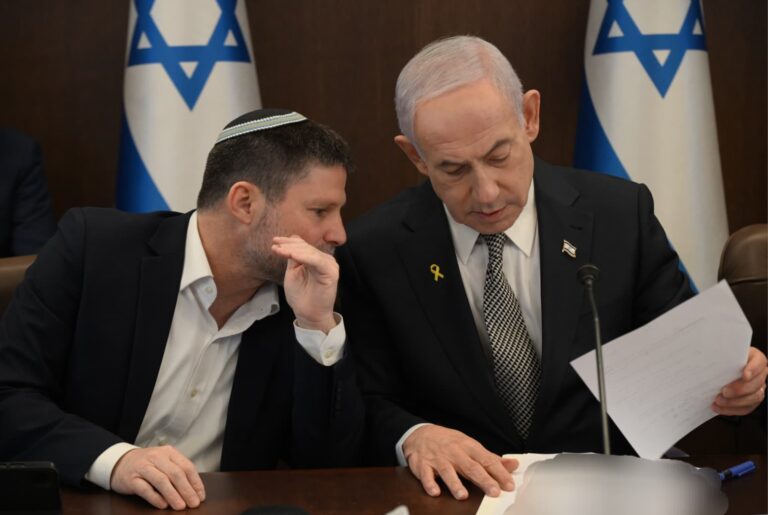
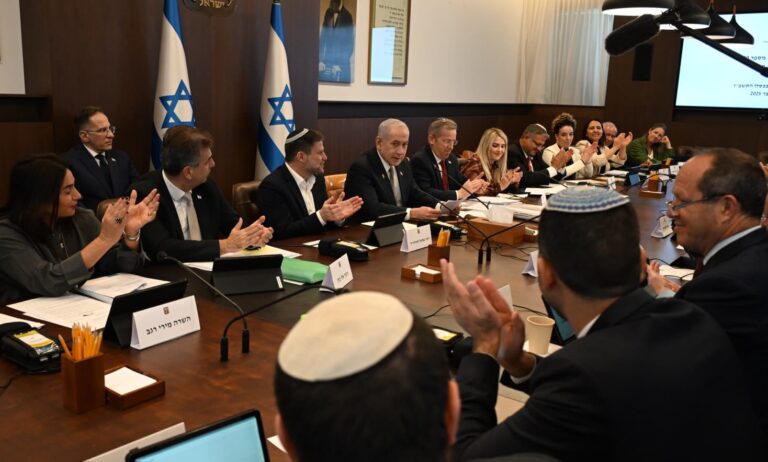
The government began discussions on the 2026 budget yesterday. The discussions are expected to continue until tomorrow morning. “In the current budget we intend to lower taxes, including income tax,” Prime Minister Benjamin Netanyahu said at the start of the cabinet meeting. “We also intend to reduce regulation and make our government systems more efficient. I know all of you will cooperate within your ministries.”
Tourism Minister Haim Katz, who initially ordered a halt to the budget discussions with the Finance Ministry, succeeded in canceling the planned addition of VAT on inbound tourism that was slated to be included in the Arrangements Law. “I thank Prime Minister Benjamin Netanyahu and Finance Minister Bezalel Smotrich for removing the VAT clause from the Arrangements Law and for understanding that this is our opportunity to bring about the recovery of tourism in Israel, which will contribute to the economy and to public diplomacy,” Katz said.
While the government was convening, Davar obtained a new draft of the economic plan for 2026. The draft includes the introduction of a special tax on banking activity, and the strategic plan for the natural gas sector has been removed from the Arrangements Law.
The figures presented in the document may change depending on government negotiations and the continuation of legislation in the Knesset, but at the moment the Defense Ministry’s budget is expected to stand at approximately 110 billion shekels (90 billion in the base budget and 19 billion for ‘various defense expenditures’). This amount is roughly halfway between the Finance Ministry’s intention to allocate 95 billion and the Defense Ministry’s demand for a budget of 144 billion shekels.
According to the updated budget, the deficit will stand at 3.6% of GDP. The Finance Ministry is planning an across-the-board (‘flat’) cut to government ministries, but has not indicated what percentage of cuts it will seek to advance, and in the draft the cut is marked as ‘X percent.’ An across-the-board cut is an easy tool to implement for budgetary restraint, but it can also be used as a ‘threat’ regarding the broad consequences of the various ministries’ demands, similar to the proposals to introduce VAT measures.
According to the Finance Ministry’s plan, the reinstatement of the property tax will generate revenues of 1.5 billion shekels in 2026, and in subsequent years 7.6, 8.9, and 9.5 billion shekels, respectively. The removal of the VAT exemption will cost 1.5 billion shekels in 2026 and will rise to up to 2.5 billion shekels by 2029.
In contrast, widening the income tax brackets for earners of 16,000 shekels and above will bring 4.25 billion shekels into the state in 2026, and 5 billion shekels each year thereafter. Taxing outbound flights from the country according to the principle of a carbon tax will bring 700 million shekels into the state in 2026 and 1 billion shekels per year in the following years.
The Finance Ministry’s flagship program in the 2025 budget, the undistributed profits tax, brought an estimated 8.8 billion shekels into the state this year, similar to the original plan. In 2026, revenues are expected to decrease by 4.8 billion shekels as a result of advancing tax payments.
At a press conference ahead of the cabinet meeting, Finance Minister Bezalel Smotrich said: “We are going to make sure that the tremendous successes in security and the economy return to your pockets. Because it belongs to you. The victory is yours, the success of the economy is yours, and the right to live here in the State of Israel with dignity and to make ends meet is yours.”
Smotrich praised the citizens of Israel and what he described as the responsible conduct of the government, which supported security efforts while acting with fiscal responsibility. He also criticized the banks, saying they “stood aside, took advantage of the high interest rates, and reaped enormous profits in unimaginable sums.” He further stated that the current budget would include measures to tax banks, saying: “I am not against the wealthy. But I am against exploitation and abuse.”
The Ultra-Orthodox: Outside the government, yet part of the decision-making
The Ultra-Orthodox Haredi parties withdrew from the coalition following the Haredi draft law crisis, while a draft law that appears to benefit the Haredi public is currently being promoted. Passing the budget requires a majority in the Knesset, and since the rest of the opposition wants the government to fall, dissolve the Knesset, and go to elections, they will oppose the budget. The coalition therefore needs the Haredi parties to achieve the required majority. For this reason, it can be assumed that the government will need to meet the demands of the Haredi parties, who are coming from ‘outside’ the coalition, and they are not expected to attend the night of government discussions.
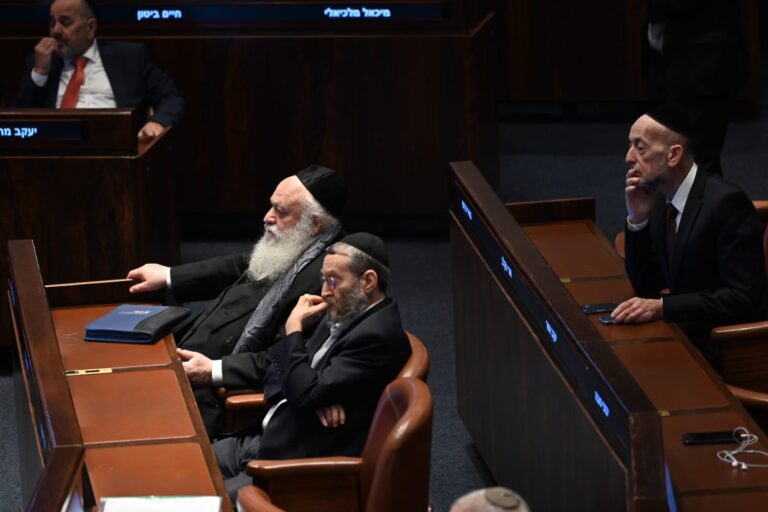
The Haredi budgetary demands can be divided into two types: issues within the base budget and matters in the coalition budgets. Issues within the base budget will begin to take shape officially once the government gives preliminary approval to the budget, while the coalition budgets can be determined separately from the main legislation. These sections include a significant portion of the budgets specific to the Haredi community including for yeshivas and Haredi educational institutions that are not part of the state education system.
Ministries without a dedicated minister or ministers holding four portfolios
Some government ministries are entering negotiations over their ministry budgets and various line items without a full-time minister. At the head of the Health Ministry, the third largest in the state budget (approximately 60 billion shekels), is Haim Katz (Likud). Katz has also served as Tourism Minister since the beginning of the government’s term, and now also serves as Minister of Welfare and Minister of Housing, two ministries significant in terms of budget (approximately 17 billion shekels and 6.5 billion shekels, respectively)
At the head of the Labor Ministry is Justice Minister Yariv Levin (Likud), who also serves as Minister for Jerusalem and Heritage Affairs, as well as Minister of Religious Services. The large number of ministries these two ministers are responsible for, combined with their relative lack of experience compared to most other ministries, places these ministries in a weak position in negotiations with the Finance Ministry.
Arrangements Law: Dramatic structural changes
As every year, the Arrangements Law, which is a unique legal mechanism where a range of economic programs and legislative amendments are passed in a single package alongside the annual state budget, remains controversial. After last year, when the Finance Ministry’s main focus was on adjustment measures, cuts, and tax increases to reduce government debt, this year there are few adjustment measures and the emphasis is on structural changes.
Among other proposals in the Arrangements Law are privatizing Israel Railways’ operations, opening the dairy market to imports at the expense of local production, and advancing privatization processes at the Airports Authority. It is also proposed to reinstate the property tax and to annually tax 1.5% of undeveloped privately owned land, tax the major banks, open competition in the banking sector, and adopt international tax regulations alongside tax incentives for multinational tech companies to maintain Israel’s investment attractiveness. Additionally, the Arrangements Law includes other tax changes, such as increasing the exemption for personal imports online from $75 to $150, tax benefits for new immigrants and returning residents, and income tax relief for earners above 16,000 shekels.